The humid climate in Louisiana requires residents to check humidity levels and leakages in their buildings. The ideal conditions that mold love are where warm air, water, and poor ventilation coincide. Controlling such conditions both indoors and out is fundamental in preventing mold buildup in both the buildings one owns and the ones they rent.
Why Preventing Mold in Louisiana Is Harder Than in Other Warm States
Louisiana occupies a subtropical belt where the average humidity reaches 75% yearly, and the Gulf Coast serves as a conduit to steer storm systems. It doesn’t share the characteristics of other warm states because the humidity doesn’t dry out. CDC guidance notes that moisture encourages indoor mold growth and that wet building materials left damp for about 24–48 hours are likely to support mold and dampness if the air or surfaces don’t dry in time. The challenge faced by the state of Louisiana isn’t warmth but moisture.
A comparison clarifies the issue.
| State | Average Annual Humidity | Annual Rainfall | Mold Concern |
| Louisiana | High-mid 70% range | Among the heaviest nationally | Persistent moisture retention |
| Texas (warm interior counties) | Mid-60% range | Lower frequency of saturated weeks | Faster drying |
| Arizona (warm desert) | Low humidity | Sparse rainfall | Mold rare unless plumbing leaks |
Those figures show why preventing mold in Louisiana requires continuous moisture control, not seasonal attention.
How Mold Starts in a Louisiana Home
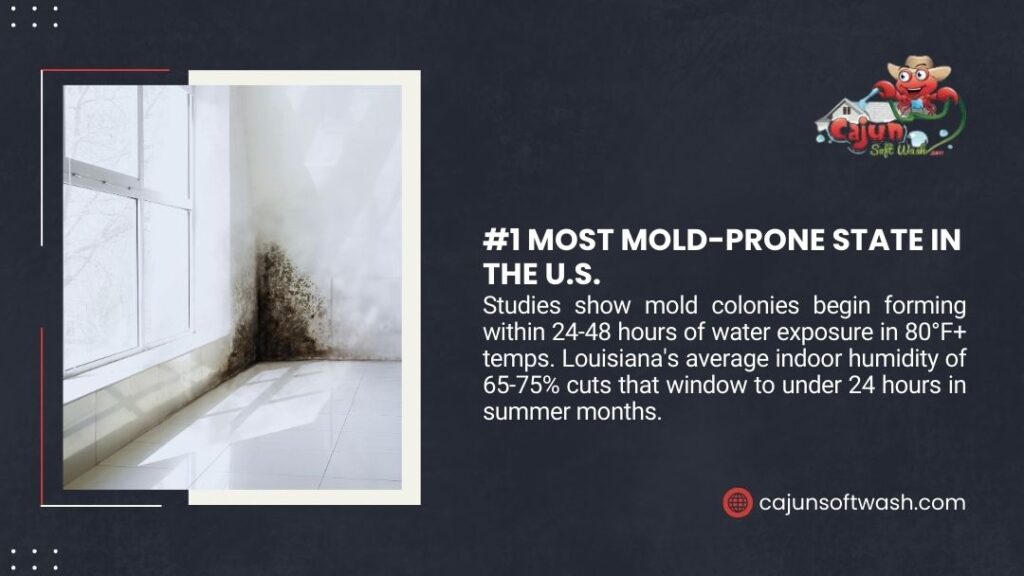
Mold spores exist everywhere, yet remain harmless when indoor surfaces stay dry, and ventilation allows air turnover. Excessive moisture changes that equilibrium. A porous material that remains wet after heavy rainfall or plumbing failure can trap moisture deep inside, and musty odors often appear before visible staining.
Kitchens, bathrooms, and laundry rooms supply steam; older window frames generate condensation during air-conditioning cycles; and any crawlspace with restricted airflow can become a persistent reservoir of humidity. Louisiana homes that survived past tropical systems can also contain hidden structural dampness behind walls.
The Louisiana Department of Health stresses that controlling and eliminating moisture, especially after flooding or leaks, is crucial to preventing mold growth and related health hazards, and residents are urged to fix water problems and dry wet materials promptly.
The homeowners who lack air circulation accelerates deterioration of wooden framing. If a property shows repeated staining, warped baseboards, or interior swelling near floors, a house mold inspection becomes a reasonable step. In older parishes with pier-and-beam foundations, a crawlspace mold inspection gives the only accurate picture of sub-floor dampness.
Health And Financial Consequences
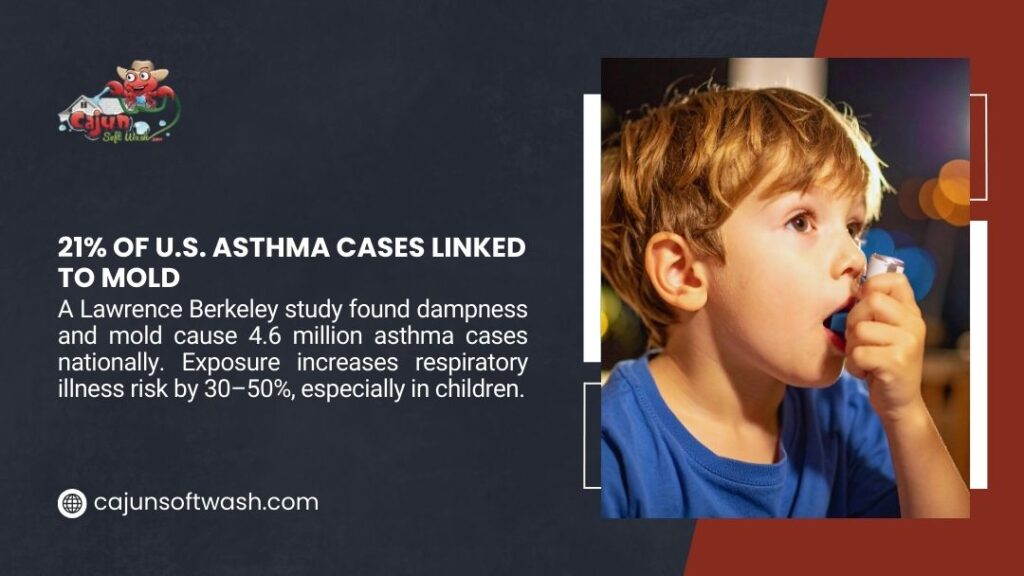
Mold exposure affects individuals differently, but Louisiana health officials warn that asthma sufferers and young children are sensitive to airborne spores. The noticeable signs of this include coughing, congestion, and irritation of the breathing passageways. Air quality varies with the mold decomposition of fibers, increasing the odor issues caused by storms.
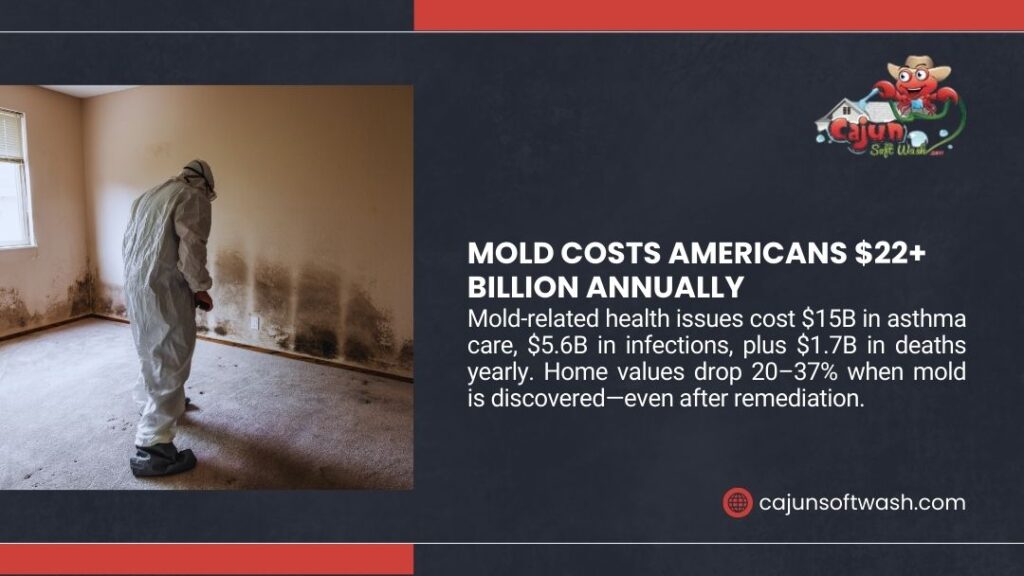
Property damage persists even when the effects are merely symptomatic, and the problem remains mild. The homeowner who finds their insulation damp or drywall damaged often finds evidence of hidden moisture beneath surface-level fixes, and the insurance companies demand proof of the source of the water intrusion problem because mold prevention in Louisiana involves an economic concern, as property desirability decreases when the problem of moisture is unchecked.
Detecting Trouble Early
Inspection does not rely on gadgets first; it relies on the senses. Musty odors in closets or hallways indicate trapped humidity. Discoloration on ceilings after a thunderstorm suggests minor roof leaks. Air-conditioning that fails to reduce indoor humidity signals inadequate drying.
When those signs concentrate in a single room, a targeted house mold inspection can supply confirmation before interior materials decay. Older Baton Rouge, Gonzales, or Denham Springs homes built above ground benefit from a crawlspace mold inspection because subfloor humidity accumulates even when the living area feels comfortable.
Any indoor surface wet longer than forty-eight hours invites fungal growth unless ventilation and temperature drop.
Room-specific risks show why.
| Location | Moisture Source | What Residents Notice |
| Bathrooms | Steam accumulation | Persistent humidity |
| Kitchens | Cooking condensation | Odors near the flooring |
| Laundry areas | Damp fabrics | Slow drying |
| Windows | HVAC condensation | Drips on sills |
| Crawlspaces | Ground moisture | Cool, damp air rising |
That table explains why single-room issues often reflect building-wide moisture.
Everyday Moisture Control Indoors
| Moisture Control Method | What It Does | Key Indicators / Targets | Practical Notes for Louisiana Homes |
| Proper air conditioning | Cools air and removes moisture when sized and set correctly | Indoor humidity ideally around 50% (not consistently above 60%) | If the house feels cool but clammy, AC may be oversized, short-cycling, or not dehumidifying enough; consider an HVAC check or dedicated dehumidification. |
| Hygrometer monitoring | Tracks indoor relative humidity in real time | Readings that hover near 50% show good control; persistent 60%+ suggests risk | Place hygrometers on each floor and in problem rooms; log readings during different times of day and during storms. |
| Bathroom exhaust fans | Removes steam at the source during showers and baths | Fogged mirrors clear within minutes after use | Run fans during bathing and for at least 20–30 minutes after; confirm fans vent outside, not into the attic. |
| Kitchen range hood | Vents cooking steam and moisture outdoors | Less condensation on nearby windows and cabinets | Use the hood whenever boiling, simmering, or washing dishes in hot water; check that the duct terminates outdoors. |
| Dryer venting to exterior | Expels moist air produced during laundry cycles | No lint or warm humid air inside the laundry room during operation | Inspect dryer vent for leaks, disconnections, or blockages; never vent dryers into garages, attics, or crawlspaces. |
| Plumbing leak repair | Stops constant moisture input from pipes and fixtures | No visible drips, damp cabinets, or unexplained water stains | Treat leaks as same-day repairs; even slow drips add continuous humidity and can feed hidden mold. |
| Building envelope inspections | Identifies hidden moisture entry from outdoors | Dry window sills, baseboards, and ceiling corners after heavy rain | Check around windows, doors, and roof penetrations for stains or soft spots; repair failed caulking or flashing quickly. |
| Dehumidifier use | Actively removes water vapor where the AC cannot keep up | Helps pull humidity back toward 50% in stubborn rooms | Useful in basements, closed-off rooms, or seasons when AC runs less, drain line or bucket maintenance is essential. |
| Household habits | Reduces preventable moisture sources indoors | Less condensation on interior windows and cool surfaces | Keep lids on boiling pots, hang laundry outdoors instead of inside, and avoid long, hot showers without ventilation. |
| Professional moisture and mold assessment | Diagnoses chronic dampness before or during mold remediation | Written findings on humidity, water sources, and needed repairs | A mold-free estimate often includes checking humidity patterns, ventilation, and building leaks; focus first on fixing moisture, then on any necessary mold cleanup. |
Residents who suspect elevated moisture can request a mold-free estimate from restoration firms, which often evaluate humidity sources before recommending remediation. The point is not chemical treatment but identifying chronic dampness.
Shield the Home from Outside Moisture
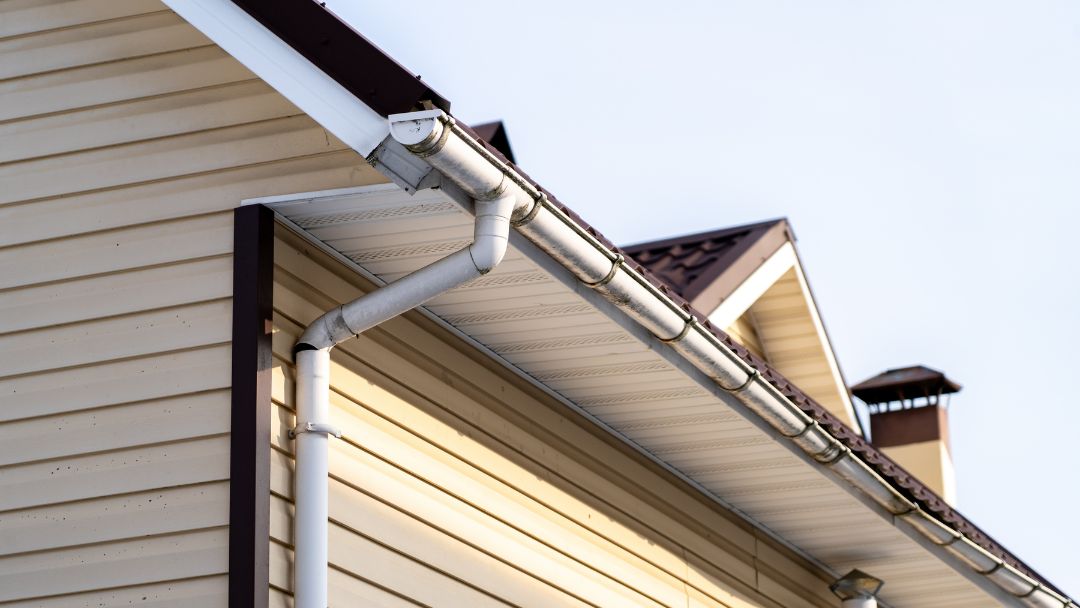
Homes in Louisiana fail from the outside in. Gutters clogged with debris push water behind the trim. Roof stains caused by algae indicate moisture retention on shingles. Stucco, brick, and siding that hold grime trap dampness after storms. These conditions drive exterior water intrusion.
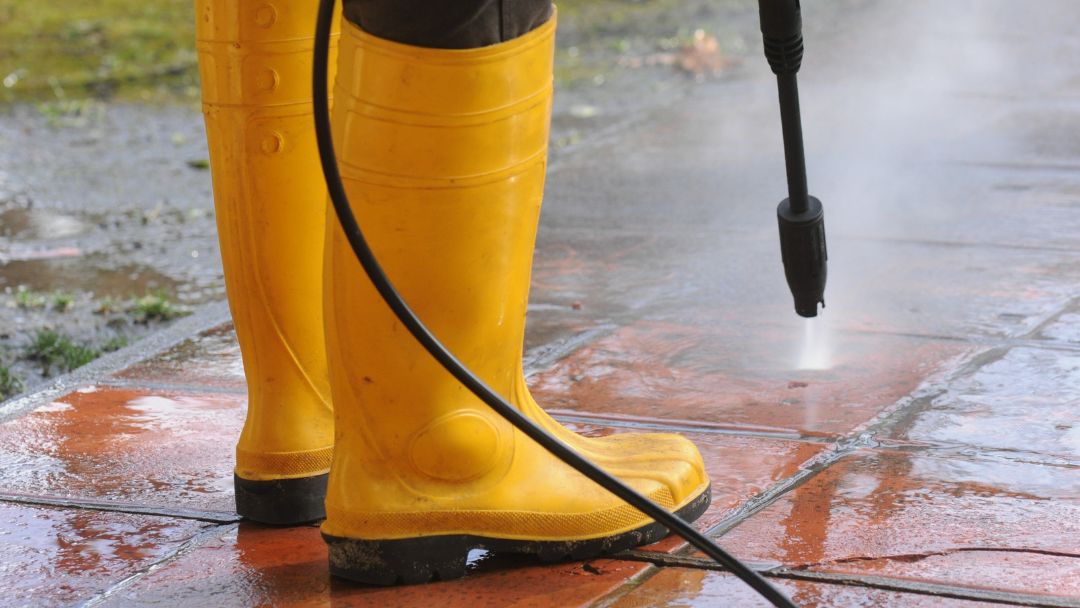
A practical mitigation path comes from routine roof washing that removes organic buildup. Cajun Softwash shows what that looks like in practice, using low-pressure roof cleaning that clears away algae without beating up the shingles.
A homeowner thinking about exterior upkeep can take a look at how soft-washing works, where biodegradable cleaners break up grime and the process avoids blasting water into the siding.
The stucco cleaning material reinforces the same point, explaining why porous exteriors respond better to controlled low-pressure washing than to force. Taken together, the message is simple: in Louisiana, mold prevention starts with roofs and exterior walls that shed moisture instead of absorbing it.
Storms, Leaks, And The Two-Day Window
Time dictates action after tropical rain. The surface that remains wet beyond 40-80 hours faces increased fungal activity. In flood remediation research following Gulf hurricanes, soaked carpeting and drywall often required removal because drying could not reach interior layers.
A homeowner dealing with roof leaks after hail or wind should document moisture levels, discard materials that trap water, and encourage airflow to remove excess moisture. Louisiana mold remediation teams follow that approach because drying first, cleaning second, and repairing last prevents cross-contamination.
A timeline clarifies priorities.
| Time From Water Intrusion | Priority |
| 0–24 hours | Remove standing water and lower humidity |
| 24–48 hours | Discard saturated porous materials |
| 2–7 days | Repair sources of water intrusion |
That progression shows why immediate drying can avert expensive repairs.
Structural Hotspots
Attics in humid climates often suffer poor ventilation, especially when insulation sits against roof decking. Air stagnates, moisture accumulates and rafters show discoloration. A crawlspace beneath a raised Louisiana home may hold ground moisture without visible water.
Vapor barriers, drainage grading and mechanical ventilation stabilize moisture levels. HVAC ducts coated with dust and moisture distribute spores through living areas, which is why maintenance schedules matter. When homeowners notice musty air when the system activates, contractors can inspect ductwork and determine whether infiltration is occurring.
Landlords, Tenants And Mold Awareness
Housing law in Louisiana recognizes the expectation that a rented dwelling remain habitable. If mold stems from structural failures, a leaking roof, plumbing problems or faulty windows, landlords are responsible for repairs.
Tenants are encouraged to document damage, notify management in writing and provide access for corrective work. Louisiana renters rights mold discussions often involve whether a tenant contributed to the condition by refusing ventilation or allowing indoor moisture.
The state does not publish a separate mold statute, but general habitability principles apply. Renters concerned about respiratory issues may request local health department guidance or legal support. Preventing mold in Louisiana remains a shared responsibility because occupants control ventilation while property owners correct structural moisture.
Professional Assistance
There are moments when household management cannot halt interior decay. Structural saturation, visible wall discoloration across several rooms, and respiratory concerns justify professional evaluation. Louisiana mold remediation companies remove contaminated materials and dry structures with commercial equipment. That process differs from routine surface cleaning because it deals with hidden moisture.
Exterior care complements indoor treatment. A roof with algae streaks absorbs heat and retains moisture. Parking areas that stay grimy and damp turn into a cozy hangout for microbes and mildew. That’s the kind of mess Cajun Softwash takes on when they clean and treat parking lots, keeping the surface from becoming a slick, bacteria-friendly zone.
Stucco care appears in its instruction on how to clean stucco without pressure washing, where rinsing removes soil without forcing water into substrate. These exterior steps matter because they defend the building envelope and protect their homes from long-term dampness.
A Seasonal Mold Plan For Louisiana
Residents experience moisture differently at each point in the calendar. Spring invites pre-storm maintenance that targets gutters and roofing. Summer tests air conditioning performance under high humidity. Autumn becomes inspection season, when exterior cleaning can remove grime before winter rain. Winter gives owners and renters the quiet period to survey closets, crawlspaces and attics for recurring moisture. Seasonality therefore reinforces the structural routine: keep surfaces dry, increase air circulation and repair water intrusion quickly.
Keeping Louisiana Homes Dry For The Long Term
The Gulf climate will not soften. Humidity will continue, storms will arrive and rainfall will test drainage systems. Yet buildings that support consistent ventilation, prompt water repair, responsible HVAC management and exterior cleaning rarely suffer the interior decay that worries homeowners. Preventing mold in Louisiana becomes a matter of acknowledging environmental pressure and responding with steady routines.
Residents in the Baton Rouge corridor who want help evaluating exterior surfaces can request residential cleaning information from Cajun Softwash through its residential cleaning services, which explains how soft-washing defends roofs, stucco, siding and outdoor structures. A Louisiana home protected from external moisture makes indoor air quality easier to preserve and helps families avoid costly remediation later.