Article Summary:
- Essential roof cleaning tools for soft wash methods
- Why soft washing equipment works better than pressure washers
- Safety gear that prevents accidents and injuries
- Which tools professionals use versus DIY alternatives
- How to choose the right equipment for your roof type
This guide explains what roof cleaning tools you need for safe, effective soft washing on Louisiana homes and commercial buildings.
Why Most People Use the Wrong Roof Cleaning Tools
Walk into any hardware store and you’ll see pressure washers marketed for roof cleaning.
Pressure washers strip protective granules off shingles. The damage happens even if you’re careful. High pressure erodes materials that took decades to wear naturally.
Soft washing uses different roof cleaning tools designed for low pressure and chemical application. The equipment costs less than pressure washers but works better for roofs.
| Tool Type | Pressure Level | Roof Safety | Typical Cost |
| Pressure Washer | 1500-3000 PSI | Damages shingles | $200-800 |
| Soft Wash System | 60-500 PSI | Safe for materials | $300-1500 |
| Garden Sprayer | 40-80 PSI | Safe but weak | $30-100 |
The right roof cleaning tools kill algae, moss, and mold at the root instead of blasting them off temporarily. This makes results last 3-5 years instead of months.
Baton Rouge’s humid climate grows roof contaminants fast. Using proper equipment saves you from cleaning twice as often.
Essential Soft Wash Equipment
Professional roof cleaning requires specific tools that work together as a system. Each piece serves a purpose.
Chemical Pump Sprayer (12V System)
This is the heart of any soft wash setup. A 12V pump moves the cleaning solution through hoses to your spray nozzle.
| Pump Specs | What It Does | Why It Matters |
| 5-7 GPM flow rate | Covers large areas fast | Finishes jobs in hours, not days |
| 60-150 PSI max | Safe pressure for roofs | Won’t damage shingles |
| 12V DC power | Runs off vehicle battery | Works anywhere without power |
Quality pumps cost $400-800 but last year with basic maintenance. Cheap pumps under $200 fail fast and waste money.
The pump connects to your chemical tank and controls pressure precisely. Too much pressure damages roofs. Too little pressure means the solution runs off before it works.
Chemical Storage Tank
You need a tank that holds 50-100 gallons of mixed cleaning solution. Smaller tanks mean constant refilling on larger jobs.
| Tank Type | Capacity | Best Use |
| Spot sprayer | 5-15 gallons | Small repairs, touch-ups |
| Standard system | 50-65 gallons | Residential roofs |
| Commercial system | 100-200 gallons | Large buildings, multi-unit |
Tanks must resist chemical corrosion. Polyethylene works well for sodium hypochlorite solutions. Metal tanks corrode and contaminate your cleaning mix.
Most setups mount the tank in a truck bed or trailer. This lets you work from the ground instead of hauling equipment up ladders.
Spray Hose and Nozzles
Long hoses let you reach roofs without climbing. Professional roof cleaning tools include 100-200 feet of chemical-resistant hose.
| Hose Length | Reach Capability | Typical Use |
| 50 feet | Single-story only | Small homes |
| 100 feet | Most two-story homes | Standard residential |
| 200 feet | Large buildings | Commercial properties |
Nozzles control spray pattern and pressure. Fan tips spread the solution evenly. Adjustable nozzles let you switch patterns without changing tips.
Never use garden hoses for chemical application. Regular hoses break down from sodium hypochlorite and contaminate your solution with rubber particles.
Surfactant Injector
Surfactants make cleaning solutions stick to vertical surfaces instead of running off. An injector adds precise amounts to your mix.
Without surfactant, your solution slides down shingles before it kills growth. With it, chemicals cling long enough to penetrate and kill organisms at the root.
Most injectors cost $50-150 and pay for themselves by reducing chemical waste. They draw surfactant from a separate container and mix it inline as you spray.
These core roof cleaning tools form a complete soft wash system. Each piece matters for safe, effective results.

Safety Equipment You Can’t Skip
Roof work sends people to hospitals every year. Proper safety gear prevents most accidents.
| Safety Item | What It Protects | Approximate Cost |
| Fall arrest harness | Prevents falls | $150–400 |
| Anchor points | Secures harness to roof | $30–100 each |
| Non-slip boots | Traction on wet surfaces | $80–180 |
| Chemical gloves | Protects hands from burns | $10–30 |
| Safety glasses | Shields eyes from splash | $15–40 |
| Respirator | Protects lungs from fumes | $30–80 |
A fall arrest harness connects you to anchor points installed on the roof. If you slip, the harness catches you instead of letting you hit the ground.
Never skip harness use on roofs steeper than 6/12 pitch. Even experienced pros use them because one mistake costs everything.
Chemical protection matters too. Sodium hypochlorite burns skin on contact and blinds if it hits eyes. Wear gloves and glasses every time you handle cleaning solutions.
Respirators filter chemical fumes when working with concentrated solutions. A basic particulate mask doesn’t protect from vapors – you need cartridge-style respirators rated for organic vapors.
Professional Tools vs DIY Alternatives
Most homeowners don’t need professional-grade roof cleaning tools if they only clean their roof every few years.
| Tool Category | Professional | DIY Alternative | Key Difference |
| Pump system | 12V electric, 5-7 GPM | Battery backpack sprayer | Volume and consistency |
| Chemical tank | 50-100 gallon mounted | 5-gallon bucket | Capacity for large jobs |
| Hose reach | 100-200 feet | 25-50 feet | Ground work vs ladders |
| Mixing system | Inline injectors | Manual measuring | Precision and speed |
DIY alternatives work for small, simple roofs. A $100 battery-powered backpack sprayer handles most single-story homes if you’re comfortable on ladders.
For two-story homes or steep roofs, professional equipment makes the job safer and faster. The reach advantage alone justifies the cost if you clean multiple properties.
Rental options exist but rarely include proper soft wash equipment. Most rental places stock pressure washers, not low-pressure chemical systems.
Understanding how to soft wash a roof helps you decide which roof cleaning tools match your skill level and project scope.
Telescoping Poles and Extension Wands
Telescoping poles extend your reach without climbing higher. They attach to spray wands for ground-level application.
| Pole Type | Max Reach | Best For |
| Standard wand | 6–8 feet | Single-story work |
| Telescoping pole | 18–24 feet | Two-story homes |
| Professional extension | 30–40 feet | Commercial buildings |
Quality poles lock securely at any length. Cheap poles collapse during use or bend under pressure. This dumps chemicals on you or damages the roof.
Carbon fiber poles weigh less than aluminum but cost more. The weight difference matters on long jobs where arm fatigue becomes a safety issue.
Some professionals skip poles entirely and use extra-long hoses with spray guns. This works but requires more physical strength to control the hose.
Poles serve as key roof cleaning tools when you want to minimize ladder time and roof walking. Less time on the roof means less fall risk.
Chemical Mixing and Measuring Tools
Accurate chemical mixing matters for both effectiveness and safety. Too weak doesn’t kill growth. Too strong damages materials.
| Measuring Tool | Accuracy | Best Use |
| Graduated bucket | ±10% | General mixing |
| Measuring jug | ±5% | Batch preparation |
| Flow meter | ±1% | Professional systems |
Most soft wash roof cleaning uses sodium hypochlorite (pool bleach) mixed with water at specific ratios. Common mixes range from 3:1 water-to-bleach up to 1:1 for heavy contamination.
A simple graduated bucket works for DIY mixing. Mark lines for common ratios so you don’t measure every time.
Professional systems use flow meters that mix ratios automatically as you spray. This ensures consistency across the entire job.
pH test strips verify your solution strength. Sodium hypochlorite loses potency over time, especially in heat. Testing confirms you’re using active chemicals, not diluted waste.
Store concentrated chemicals in cool, dark locations. Heat and light break down sodium hypochlorite fast. A 12.5% solution can drop to 8% in weeks if stored poorly.
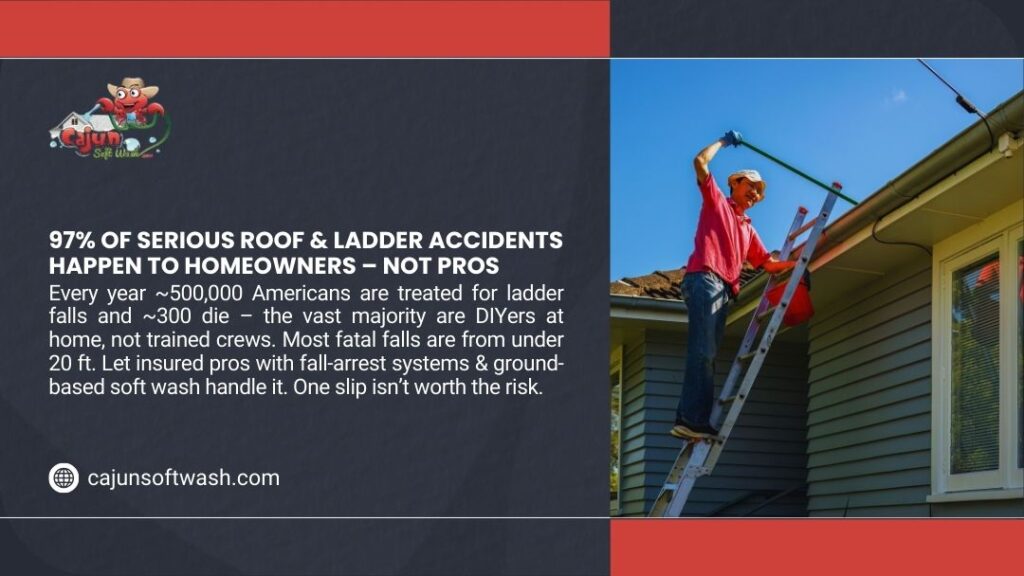
Specialized Brushes and Scrubbers
Sometimes chemicals alone don’t remove stubborn stains or heavy moss buildup. Soft bristle brushes help without damaging shingles.
| Brush Type | Bristle Material | Use Case |
| Soft car wash brush | Synthetic, very soft | Light scrubbing on delicate surfaces |
| Medium deck brush | Nylon, medium stiff | General roof cleaning |
| Stiff utility brush | Polypropylene | Heavy moss removal |
Never use wire brushes or stiff metal bristles on roofs. They scrape away protective coatings and granules just like pressure washing does.
Brushes attach to telescoping poles for ground-level work or hand use when you’re on the roof. Extension poles let you scrub without walking on wet, chemically-treated surfaces.
Most soft washing jobs don’t require scrubbing. The chemicals do the work if you allow proper dwell time. Brushes mainly help on neglected roofs with years of buildup.
For new stains or regular maintenance, spray application alone handles the job. This makes soft washing faster and safer than scrub-intensive methods.
Maintenance Tools for Your Equipment
Roof cleaning tools need regular maintenance to stay effective and safe. Neglected equipment fails during jobs or causes injuries.
| Maintenance Task | Frequency | Why It Matters |
| Flush pump and hoses | After every use | Prevents chemical buildup |
| Check harness stitching | Monthly | Catches wear before failure |
| Inspect hose connections | Before each job | Stops leaks and equipment failures |
| Replace worn nozzles | As needed | Maintains proper spray pattern |
| Clean spray tips | After every use | Prevents clogging |
Sodium hypochlorite corrodes metal and breaks down rubber. Flush your entire system with fresh water after each use. This adds 10 minutes but extends equipment life by years.
Harness inspection catches fraying stitches or worn straps before they fail. Replace harnesses every 3-5 years regardless of condition. Your life isn’t worth gambling on old safety gear.
Nozzle tips wear from chemical exposure and debris. Worn tips produce uneven spray patterns that waste chemicals and miss spots. Replace them when spray becomes irregular.
Store all roof cleaning tools in cool, dry locations away from direct sun. UV light degrades plastics and rubbers faster than normal use does.
Cost Breakdown for Roof Cleaning Tools
Building a complete soft wash system costs significant money upfront. Here’s realistic pricing for quality equipment.
| Equipment Item | Basic Quality | Professional Grade |
| 12V chemical pump | $300-500 | $600-1200 |
| Storage tank (50-100 gal) | $150-300 | $400-800 |
| Chemical hose (100+ ft) | $100-200 | $250-500 |
| Spray gun and wands | $80-150 | $200-400 |
| Safety harness system | $150-300 | $400-800 |
| Ladder equipment | $200-400 | $500-1000 |
| Total System Cost | $980-1850 | $2350-4700 |
These numbers don’t include chemicals, which run $50-150 per roof depending on size and contamination level.
For homeowners cleaning their own roof once every 3-4 years, this investment doesn’t make financial sense. Hiring professionals costs $400-1000 per cleaning – less than buying equipment used twice.
For property managers handling multiple buildings or contractors adding services, professional roof cleaning tools pay for themselves in 5-10 jobs.
Quality matters more than price alone. Cheap equipment fails fast, wastes chemicals, and creates safety hazards. Mid-grade tools from reputable manufacturers provide the best value.
When to Call Professionals vs DIY
Some situations always require professional-grade roof cleaning tools and expertise regardless of homeowner skill level.
Hire professionals when:
- Roof steeper than 6/12 pitch
- Building is three stories or higher
- You lack proper safety equipment
- Roof shows structural damage
- Heavy contamination covers most surfaces
- You’re uncomfortable with heights
- Local regulations require licensed contractors
Professional roof cleaning costs less than hospital bills from DIY accidents. It also costs less than roof replacement from using wrong tools or techniques.
Cajun Softwash handles all roof types throughout the Baton Rouge area. Our professional roof cleaning tools and trained teams work safely on roofs homeowners shouldn’t attempt themselves.
We carry full insurance covering property damage and injuries. If something goes wrong during our work, you’re protected. DIY accidents leave you paying all costs out of pocket. For free estimates on your roof cleaning project, contact Cajun Softwash. We’ll assess your roof, explain what it needs, and provide clear pricing with no surprises.

Frequently Asked Questions About Roof Cleaning Tools
What roof cleaning tools do I need for soft washing?
Essential roof cleaning tools include a 12V chemical pump (5-7 GPM), 50-100 gallon storage tank, 100+ feet of chemical-resistant hose, adjustable spray nozzles, and complete safety equipment like harness, non-slip boots, and chemical-resistant gloves.
Can I use a pressure washer for roof cleaning?
Pressure washers operate at 1500-3000 PSI which strips protective granules from shingles and voids most roof warranties. Soft washing uses 60-500 PSI with cleaning chemicals for safe, effective results that last years longer.
How much do professional roof cleaning tools cost?
Basic soft wash systems cost $1000-2000 for DIY setups. Professional-grade equipment runs $2500-5000. For homeowners cleaning once every few years, hiring professionals at $400-1000 per job costs less than buying equipment.
What’s the most important roof cleaning tool?
The chemical pump system is most critical. It controls pressure precisely and delivers cleaning solutions effectively. A quality 12V pump with proper PSI range ($400-800) makes the difference between safe results and damaged roofs.
Do I need special tools for different roof types?
Yes, asphalt shingles, metal roofing, and tile require different pressure settings and chemical strengths. Professional roof cleaning tools include adjustable pumps and multiple nozzle options to handle various materials safely without damage.