Article Summary:
- Why soft washing works better than traditional cleaning methods for most exterior surfaces
- The science behind low-pressure chemical cleaning and why it lasts longer
- Cost comparison between soft washing and pressure washing
- Which surfaces benefit most from soft wash cleaning
- When property owners should hire professionals versus attempting DIY
This guide breaks down soft washing for Louisiana property owners who want clean exteriors without the damage or frequent repeat cleanings.
Why High-Pressure Cleaning Ruins More Than It Cleans
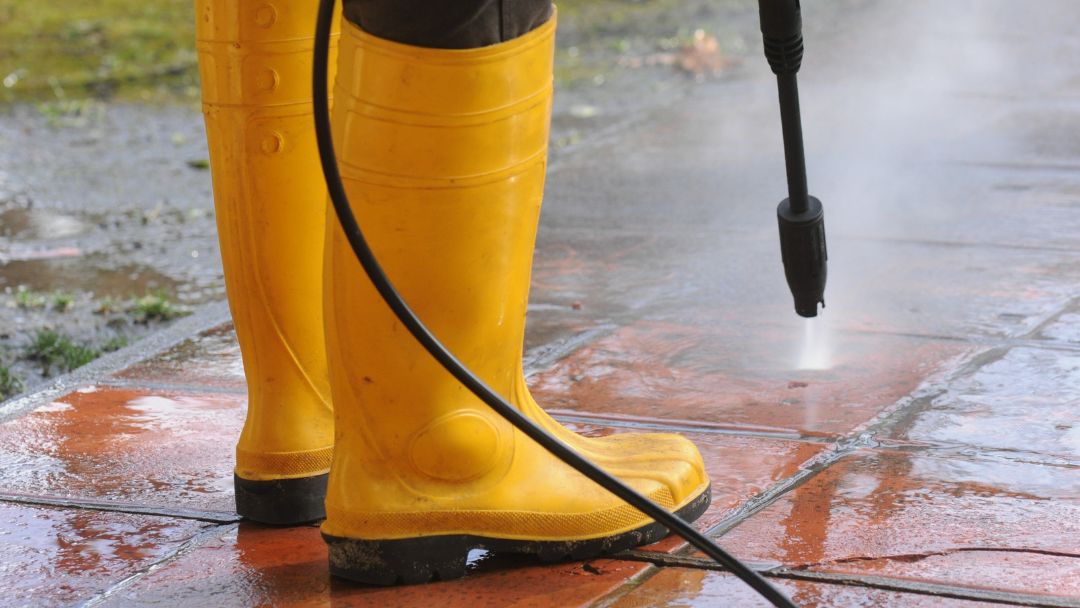
Pressure washers blast away surface grime at 2,000-4,000 PSI. This strips paint, erodes wood, and damages siding. Worse, it only removes visible growth while leaving roots intact. Algae and mold regrow in months, not years.
Soft washing uses 60-500 PSI with cleaning solutions designed to kill organisms at their source. The pressure rinses away dead material. The chemicals prevent regrowth.
| Cleaning Method | Pressure Level | Surface Safety | Results Duration |
| Pressure Washing | 2,000-4,000 PSI | High damage risk | 3-6 months |
| Soft Washing | 60-500 PSI | Safe for materials | 2-5 years |
| Garden Hose | 40-80 PSI | Safe but weak | Weeks only |
Louisiana’s humidity accelerates biological growth on buildings. Baton Rouge properties face constant assault from algae, mold, and mildew. Traditional cleaning methods can’t keep up without causing material damage.
The difference between soft wash vs pressure wash comes down to killing growth versus temporarily removing it.

The Chemistry That Makes Soft Washing Work
Soft washing relies on specific chemical formulations rather than water force. The solution does the actual cleaning work.
Most professional soft wash cleaning uses sodium hypochlorite as the base ingredient. This is pool bleach, not household bleach. The concentration matters significantly.
Core Ingredients:
| Component | Purpose | Typical Concentration |
| Sodium hypochlorite | Kills algae, mold, bacteria | 2-6% final mix |
| Surfactants | Makes solution cling to surfaces | 1-3% of mix |
| Water | Dilutes and rinses | 90-95% of solution |
Surfactants deserve special mention. Without them, the cleaning solution runs straight down vertical surfaces before it can work. Surfactants make the mix stick long enough to penetrate and kill growth.
The chemical reaction happens during what professionals call “dwell time.” After application, the solution sits on surfaces for 10-20 minutes. This allows the sodium hypochlorite to break down organic material and kill living organisms.
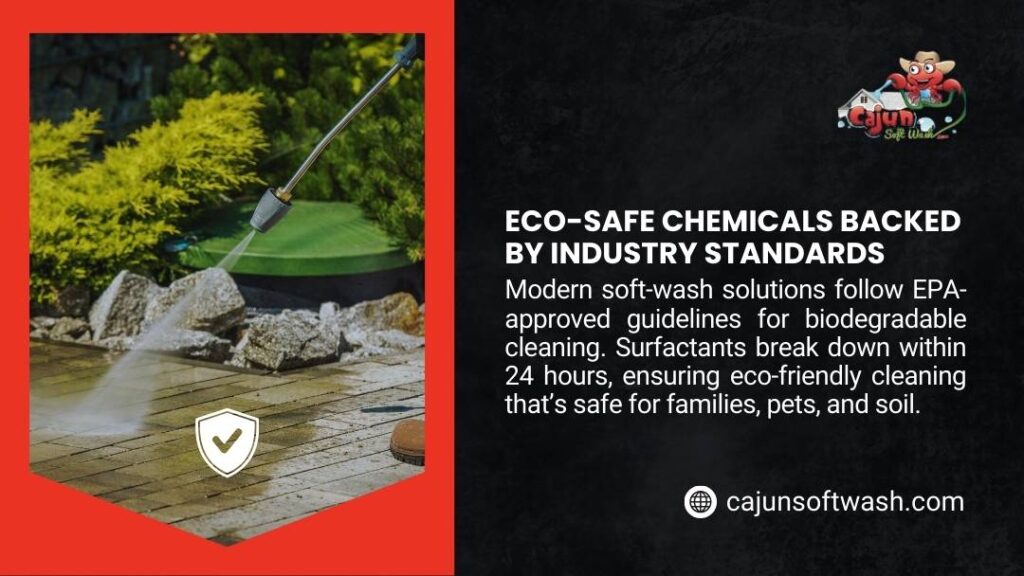
Proper soft washing chemicals use biodegradable ingredients that break down naturally after doing their job. This protects landscaping and groundwater while still killing harmful growth.
Different surfaces need different chemical strengths. Asphalt shingles tolerate stronger solutions than painted wood. Metal roofs require gentler formulas than vinyl siding.
What Soft Washing Actually Removes
Buildings accumulate more than just dirt. Multiple organisms attack exterior surfaces in humid climates, each causing specific damage.
| Contaminant | What It Does | Damage Timeline |
| Gloeocapsa Magma (algae) | Eats limestone in materials | 2-4 years to visible damage |
| Moss | Roots lift and separate surfaces | 1-3 years to water intrusion |
| Mildew/Mold | Spreads to interior spaces | 6 months to health issues |
| Lichen | Combines algae and fungus | 3-7 years to material breakdown |
Gloeocapsa Magma causes those black streaks on roofs and siding. This algae species feeds on limestone that manufacturers add to building materials. As it consumes limestone, it exposes underlying materials to UV damage and moisture.
Moss holds water against surfaces constantly. On roofs, this leads to wood rot in decking. On siding, it breaks down paint and coatings. The physical roots pry materials apart over time.
Soft washing kills all these organisms at their root systems. Pressure washing only removes visible growth while leaving microscopic spores that regrow rapidly.
The Soft Wash Process Step by Step
Professional soft wash cleaning follows a specific sequence. Each step matters for results and safety.
Step 1: Surface Assessment
Technicians check for existing damage before applying any chemicals. Loose materials, failing seals, and damaged areas get noted. Cleaning won’t fix structural problems and can make some issues worse if not addressed first.
Step 2: Area Preparation
Plants and landscaping near the building get pre-wetted or covered. This protects them from chemical contact. Windows get closed. Electrical fixtures get covered.
Step 3: Chemical Application
Solutions get applied from bottom to top on vertical surfaces. This prevents streaking. Application happens in sections to maintain consistent coverage without dry spots.
Professional equipment reaches two-story buildings from the ground. No ladder work means reduced accident risk and faster completion.
Step 4: Dwell Time
The solution sits on surfaces for 10-20 minutes depending on contamination level and surface type. This can’t be rushed. Insufficient dwell time produces poor results that don’t last.
Step 5: Low-Pressure Rinse
After dwell time, low-pressure water (100-500 PSI) rinses away dead material and chemical residue. Rinsing goes top to bottom to follow natural water flow.
The entire process takes 2-4 hours for typical residential properties. Commercial buildings require more time based on size and contamination levels.For those interested in DIY approaches, this guide on how to soft wash a roof covers the basics, though professional service remains safer for most property owners.
Cost Analysis: Soft Washing vs Traditional Methods
Property owners need to consider total cost over time, not just initial service price.
| Cost Factor | Pressure Washing | Soft Washing |
| Initial service | $200-400 | $400-800 |
| Frequency needed | Every 6-12 months | Every 2-4 years |
| Material damage risk | High | Minimal |
| Annual cost (averaged) | $300-600 | $150-300 |
Soft washing costs more per service but requires fewer services overall. The math works in favor of soft washing for most properties.
Material replacement from pressure washing damage adds hidden costs. Stripped paint needs repainting. Damaged siding requires replacement. Eroded wood decking costs thousands to repair.
Soft washing prevents this damage while producing longer-lasting cleanliness. The biodegradable solutions break down naturally without harming materials or landscaping.
Which Surfaces Benefit Most From Soft Washing
Not every surface needs the same cleaning approach. Soft washing works best on specific materials common in Louisiana construction.
Best Applications:
| Surface Type | Why Soft Washing Works |
| Asphalt shingles | Removes algae without granule loss |
| Vinyl siding | Cleans without warping or cracking |
| Wood surfaces | Kills mold without fiber damage |
| Stucco/brick | Penetrates porous surfaces safely |
| Painted surfaces | Preserves coatings and finishes |
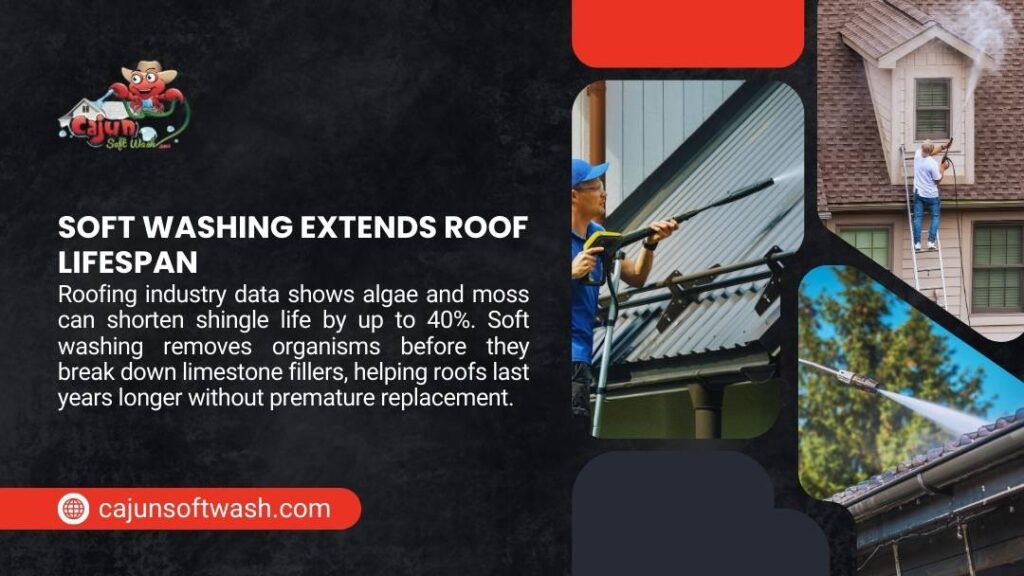
Roofs benefit tremendously from soft washing. The soft wash roof cleaning process extends roof life by removing organisms that break down materials. Many property owners see 5-7 year life extensions from regular cleaning.
When Property Owners Need Professional Service
Some situations always require professional soft washing regardless of property owner capability or willingness.
Hire professionals when:
- Buildings exceed two stories
- Roof pitch exceeds 6/12
- Heavy contamination covers large areas
- You lack proper safety equipment
- Local regulations require licensed contractors
- Property shows structural damage
- Time constraints prevent DIY approaches
Professional soft wash cleaning costs $300-800 for typical residential properties in the Baton Rouge area. Commercial properties cost more based on size and contamination levels.
This investment protects property value, prevents premature replacement, and eliminates safety risks from DIY attempts. Professional service includes insurance coverage that protects property owners from liability.
Cajun Softwash serves the Greater Baton Rouge area with trained technicians who handle all property types safely.
We customize chemical solutions for each surface type and contamination level. Our equipment reaches difficult areas without ladder work or roof walking that damages materials.
We carry full insurance and offer a 5-year limited warranty on roof cleaning services. Free estimates include property assessment and clear pricing with no hidden fees.
Frequency Guidelines for Different Properties
How often properties need soft washing depends on multiple environmental factors specific to Louisiana.
| Location Factor | Recommended Frequency |
| Heavy tree coverage | Every 1-2 years |
| Direct sun exposure | Every 3-4 years |
| Near water bodies | Every 2-3 years |
| High traffic areas | Every 2 years |
Baton Rouge’s humidity and temperature create ideal conditions for biological growth. Properties here need more frequent cleaning than those in drier climates.
Buildings under trees accumulate debris and stay shaded. This speeds up mold and algae growth significantly. Annual or biennial cleaning prevents heavy contamination.
Properties in direct sun benefit from UV’s natural growth inhibition. These can wait 3-4 years between cleanings without heavy buildup.
Commercial properties in high-visibility locations benefit from shorter cleaning cycles. A clean exterior maintains professional appearance and customer confidence.
Regular soft washing costs less than dealing with heavy contamination. Early cleaning prevents organisms from establishing deep root systems that take stronger chemicals to eliminate.
Key Takeaways for Property Owners
Soft washing offers Louisiana property owners a practical solution for exterior cleaning that balances effectiveness, safety, and cost.
The low-pressure chemical approach kills organisms at their source rather than temporarily removing surface growth. This produces results that last 2-5 years compared to months with pressure washing.
Biodegradable cleaning solutions break down naturally without harming landscaping or building materials. The customized formulations work safely on various surface types from roofs to siding to concrete.
Professional service costs more initially but less over time compared to frequent pressure washing. The reduced material damage and longer-lasting results justify the investment for most property owners.
Buildings in Louisiana’s humid climate benefit significantly from regular soft washing. The process protects material integrity while maintaining appearance and property value.
Get Your Property Cleaned the Right Way
Cajun Softwash has served the Baton Rouge area since 2013 with professional soft washing services for residential and commercial properties. Our trained technicians use proper equipment and customized solutions for safe, effective exterior cleaning.
We handle everything from single-story homes to multi-building commercial complexes. Our 5-year limited warranty on roof cleaning backs up our commitment to quality results.
Visit our website to schedule your consultation. Let us show you what professional soft washing can do for your Louisiana property.
Frequently Asked Questions About Soft Washing
How long does soft washing take for a typical house?
Soft washing a typical home usually takes 2-4 hours, including prep, application, and rinsing. Bigger homes or heavy dirt may take up to 6 hours.
Can soft washing damage my landscaping?
When done professionally, soft washing is safe for plants. Experts pre-wet sensitive areas and use biodegradable chemicals that break down quickly without damaging vegetation.
What’s the best season for soft washing in Louisiana?
Spring and fall are ideal due to moderate temperatures and lower humidity. Avoid extreme heat or cold and make sure no rain is expected within 48 hours after cleaning.
Does soft washing work on commercial buildings?
Soft washing safely cleans roofs, siding, and concrete on commercial properties, offering long-lasting results with minimal disruption.
How much does professional soft washing cost?
In Baton Rouge, prices typically range from $0.20 to $0.50 per square foot. A 2,000 sq ft home usually costs between $400 and $800.