Green algae on vinyl siding isn’t “just dirt,” it rarely stays a small problem. With Baton Rouge’s long-term normals showing roughly 61.94 inches of annual precipitation at Ryan Airport, moisture hangs around long enough for green growth to keep reappearing.
This guide explains what green algae on vinyl siding is, why it loves Louisiana homes, how to remove green algae from vinyl siding without forcing water behind panels, and how to prevent algae on vinyl siding so the stains don’t boomerang back after the next humid stretch.
Understanding Green Algae on Vinyl Siding
Green algae on vinyl siding is a living film that clings to the surface and feeds on moisture, airborne dust, and whatever else settles on your exterior. In Louisiana, green algae on vinyl siding often shows up first on shaded elevations and the north side of the house, where dew dries slowly, and damp air lingers. Green algae on vinyl siding can look like a light mint haze at first, then deepen into a thicker green stain that spreads along seams, corners, and under eaves.
A lot of homeowners call all green staining mold, but green algae on vinyl siding is usually algae, sometimes mixed with mildew, and occasionally paired with mold in persistently wet, shaded spots. The distinction matters because the best vinyl siding cleaner for green algae on vinyl siding isn’t always the same solution you’d pick for heavy mold on vinyl siding.
What it is, what it isn’t, and why that matters
Louisiana’s warmth and humidity set the table. Add steady rainfall and frequent wet-dry cycles, and green algae on vinyl siding has a reliable routine: wet surface, mild shade, nutrients in airborne grime, repeat.
To keep this practical, here’s a quick field guide that helps you decide whether you’re dealing with green algae on vinyl siding, mildew, or something closer to mold on vinyl siding.
| What you see on the wall | Most likely cause | Typical location pattern | What it usually means for cleaning vinyl siding |
| Green film or green streaks that smear when wet | Green algae on vinyl siding | Shaded sides, under soffits, near sprinklers | An algae cleaner with proper dwell time works best; gentle rinsing matters |
| Gray/white dusty patches that wipe off | Mildew on vinyl siding | Areas with constant shade and trapped humidity | Mild cleaner may work; prevention focuses on airflow and dry time |
| Dark spotting that looks embedded or speckled | Mold on vinyl siding or mixed growth | Behind shrubs, near downspouts, persistently damp areas | Stronger approach, tighter safety rules, and deeper prevention checks |
| Chalky white residue, not slimy | Oxidation or weathering | Sun-heavy sides | Cleaner choice changes; scrubbing can worsen the look |
When green algae on vinyl siding dominates, the goal isn’t to blast it off. The goal is to break the biofilm, let chemistry do its job, then rinse in a way that keeps water out of the wall cavity.
What is the green stuff on my siding in humid Louisiana weather?
Here’s the thing: Louisiana doesn’t have to rain for green algae on vinyl siding to thrive. Dew, fog, and humid nights can keep vinyl damp for hours. Once the surface stays wet long enough, algae and mildew settle in. The region’s weather patterns help explain why this keeps happening: frequent precipitation throughout the year, with many months averaging several inches of rain.
Green algae on vinyl siding also rides in on windborne particles. If your home sits near trees, ponds, or dense landscaping, more organic debris lands on the siding, and that becomes food. If you’re near irrigation overspray, it’s basically a subscription plan for green algae on vinyl siding.
Why does algae on vinyl siding show up fast on the north side of the house
Louisiana homes often share the same “why me” setup, even when the homeowners have totally different neighborhoods.
Shaded exposure is the biggest driver. The north and east sides get less direct sun, so green algae on vinyl siding dries slowly. Gutters and downspouts are next. A minor overflow can keep a strip of siding wet day after day, and green algae on vinyl siding will follow that wet path like it has a map.
Then there’s splashback. Heavy rain hits soil, mulch, or a flower bed, then bounces moisture and dirt onto vinyl. That dirt holds moisture on the surface, and green algae on vinyl siding spreads along the damp, gritty band.
If your siding sits close to shrubs, the wall stays humid and shaded. That microclimate pushes mildew on vinyl siding and green algae on vinyl siding to return sooner, even after a good wash.
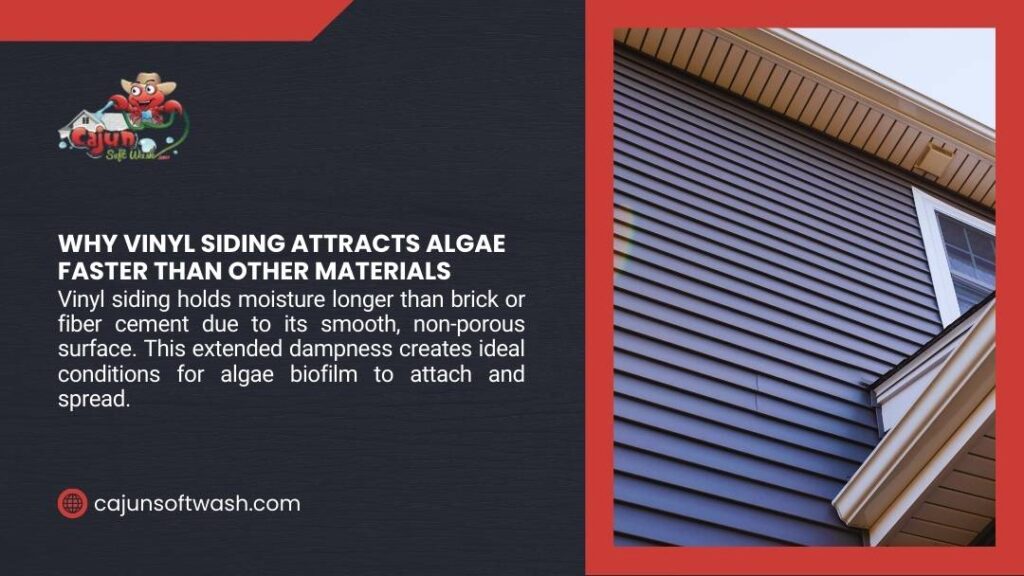
How to remove green algae from vinyl siding without damaging panels or seams
If you want the clean result without the why does my wall feel damp inside regret, treat green algae on vinyl siding as a chemistry job, not a pressure job.
Cleaning vinyl siding safely comes down to three rules: apply the right cleaner, allow dwell time, and rinse top-down in a way that avoids shooting water up behind laps.
The seam-safe method that works in Louisiana
Green algae on vinyl siding responds best when the cleaner stays on long enough to break the biofilm. Rushing is what forces people to scrub too hard or crank pressure too high, and that’s when vinyl seams can trap water.
Start with a gentle wetting rinse from a downward angle. You want the siding damp, not flooded. Apply your algae cleaner so it covers the green areas evenly. Let it sit. That dwell time is the difference between wiping away green algae on vinyl siding and fighting it with elbow grease.
After dwell time, rinse from the top down. Keep the spray angled downward. Avoid shooting upward into laps, J-channels, or corners. If you need agitation, use a soft brush with light passes. Vinyl is durable, but aggressive scrubbing can leave scuff marks and uneven sheen.
If you’re dealing with green algae on vinyl siding plus mold on the siding of the house in a shaded corner, run the same method, just adjust the cleaner choice and safety precautions.
Best vinyl siding cleaner choices: DIY mixes vs store-bought options
The best siding cleaner depends on how thick the growth is, whether you also see mold on vinyl siding, and how often green algae on vinyl siding comes back on your property.
This table sorts your options like a decision tool rather than a random list.
| Situation on the wall | Best vinyl siding cleaner direction | Why does it work on green algae on vinyl siding | Notes for Louisiana homes |
| Light green film, first-time staining | Mild diy siding cleaner with surfactant | Breaks surface film and lifts organic residue | Works best if you rinse and dry. Conditions improve |
| Moderate green staining, spreads along seams | Algae remover for siding with longer dwell time | Biofilm needs time and chemistry, not force | Focus on shaded sides and overflow zones |
| Heavy green algae on vinyl siding with dark spotting | Stronger, cleaner approach with strict safety | Mixed growth may include mold on vinyl siding | Prioritize ventilation and PPE; avoid mixing chemicals |
| Regrowth every season | Maintenance wash plan plus prevention fixes | Removes new algae before it bonds | Fix shade, drainage, and overspray, or it will repeat |
If you use chlorine-based products, treat them with respect. The U.S. EPA warns against mixing bleach with ammonia-containing cleaners because toxic fumes can result. The CDC repeats the same point: never mix bleach with ammonia or other cleaners. Those warnings apply even outdoors, because wind can still push fumes toward you.
Homemade Vinyl Siding Cleaner Recipe
Homeowners ask for a homemade vinyl siding cleaner because store products feel expensive, and Louisiana homes often need repeat maintenance. A sensible approach is a mild cleaner first, then step up only if green algae on vinyl siding laughs at the first attempt.
A common, gentle path uses water plus a mild detergent and a small amount of oxygen-based cleaner. It helps remove green algae on vinyl siding without turning the yard into a casualty. Whatever you use, pre-wet plants, cover delicate landscaping when practical, then rinse the vegetation after the job. That simple habit reduces leaf spotting and stress.
If you use bleach-based mixes for stubborn mold on vinyl siding, keep the safety line bright and unambiguous: do not mix with other cleaners.
Pressure Washer or Not? The safest way to clean vinyl siding in Louisiana
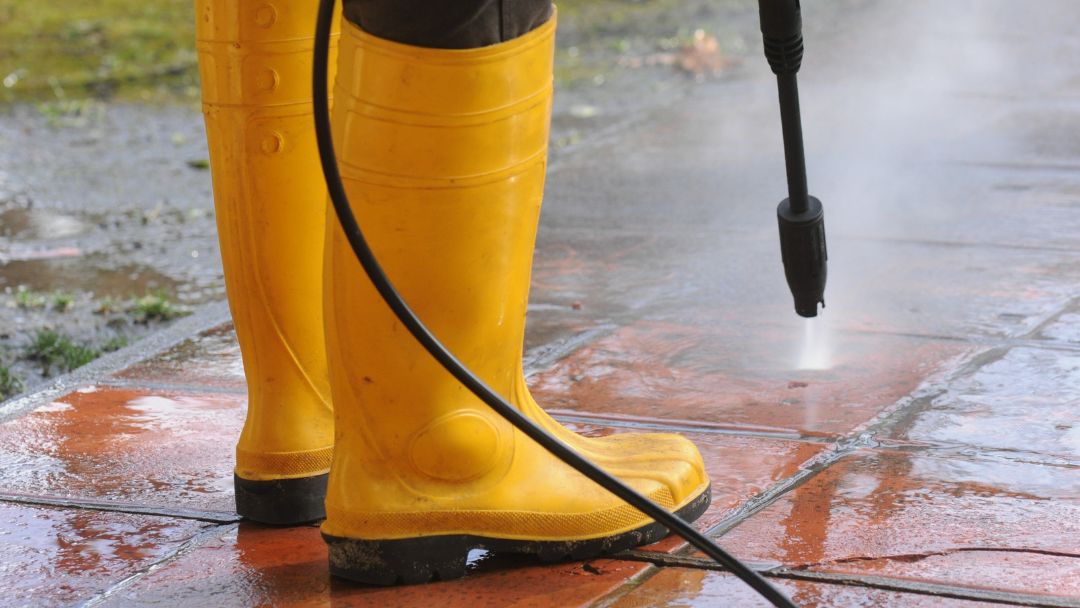
Pressure washers are not inherently evil. The problem is how people use them. If you pressure wash vinyl the way you pressure wash concrete, you can drive water behind panels, soak the sheathing, and create conditions where mold on siding and even interior moisture problems become more likely. Louisiana’s humidity makes drying slower, which makes trapped moisture more consequential.
If you decide to use pressure at all, keep it conservative and keep the wand angled down. Never shoot upward. Never pin the seam into the seam. Treat corners, vents, and trims as no-go zones for aggressive spray. For most homeowners, a soft wash approach is the safer lane. The soft wash vs pressure wash breakdown from Cajun Softwash lays out the risks.
Prevent Algae on Vinyl Siding: A Maintenance Schedule for Louisiana Humidity
In Louisiana, the best fix is the one that reduces how often green algae on vinyl siding gets a foothold. You don’t need perfection. You need a rhythm.
Use the climate reality as your baseline. In a wet climate, prevention is less about one heroic cleaning and more about routine exterior home cleaning plus drainage fixes.
Here’s a practical schedule that prevents green algae on vinyl siding without turning your weekends into chores.
| Home condition | Suggested wash cadence | Prevention focus that reduces green algae on vinyl siding | What to check first |
| Full sun, good airflow | Once per year | Remove light algae before it bonds | Hose runoff path and irrigation aim |
| Mixed sun and shade | Every 6–9 months | Keep shaded sides from building biofilm | Gutters, downspouts, overspray |
| Heavy shade, near trees, frequent regrowth | Every 4–6 months | Break the cycle early | Trim vegetation, improve drainage, and clean gutters |
| Near ponds, woods, or constant moisture | Seasonal checks plus targeted cleans | Stop algae on house siding from spreading | Splashback zones and downspout discharge |
Louisiana humidity and exterior cleaning are closely connected, especially when it comes to how quickly staining and buildup return, something Cajun Softwash describes in a way that mirrors what homeowners regularly see on their own properties.
When green algae keeps coming back: what homeowners miss
Green algae on vinyl siding loves invisible problems that people don’t associate with staining.
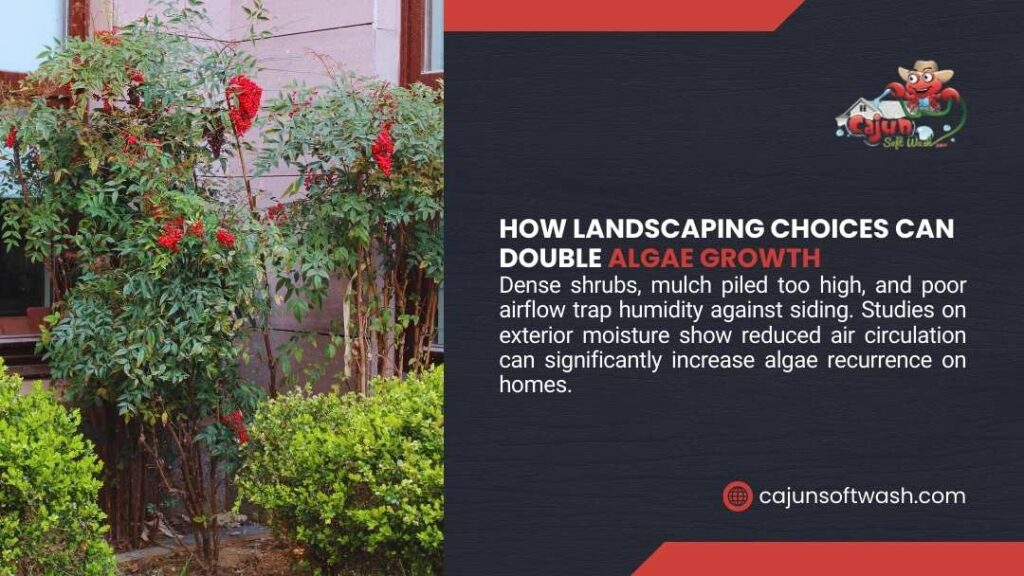
Downspouts that dump water near the foundation keep walls damp through splashback. Mulch piled too high holds moisture right where the siding ends. Shrubs that touch the wall block air, trap humidity, and keep dew from evaporating. Irrigation aimed a few degrees too high can keep a wall wet for minutes each morning, which is plenty of time for algae on siding to thrive.
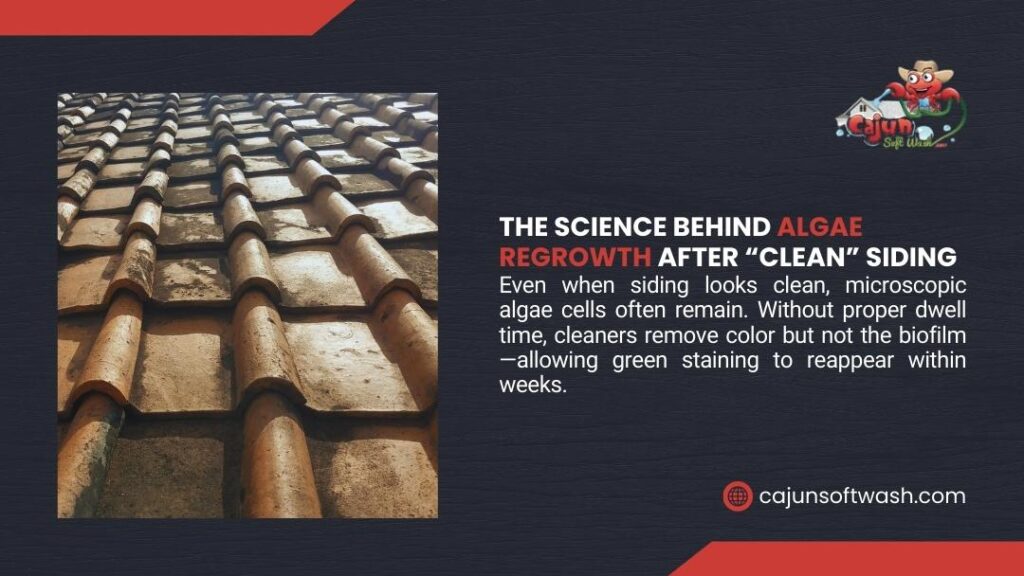
Then there’s the false clean. Some homeowners rinse until the wall looks better, but the biofilm remains. In a week or two, green algae on vinyl siding looks like it never left. That’s why dwell time matters. The cleaner has to do the work before the rinse.
If you also see black mold on vinyl siding in corners, don’t treat it casually. Mold is a broader issue than algae, and understanding black mold vs mildew makes it easier for homeowners to recognize what they’re dealing with and respond in a way that actually fits the problem.
When to call a professional soft wash service
There’s DIY, and then there’s this, which is a fall risk. Multi-story walls, steep landscaping, and heavy green algae on vinyl siding that returns every season can justify a pro call.
Pros also help when you have mixed staining: green algae on vinyl siding plus mildew on house siding, plus dark spotting that suggests mold on house siding in a persistently damp corner. They have the equipment to apply solutions evenly, manage runoff, and rinse without driving water into seams.
For homeowners, understanding what residential exterior cleaning services typically cover helps clarify how issues like algae, mildew, and surface buildup are addressed across more than just vinyl siding. On the commercial side, recurring growth on building exteriors tends to raise broader concerns around curb appeal and public perception, which is why commercial exterior cleaning is usually approached with more structured, large-scale maintenance in mind.
Final Thoughts
Green algae on vinyl siding is common, persistent, and completely manageable when you stop treating it like just grime. Use the seam-safe approach, choose an algae cleaner that fits the severity, allow dwell time, rinse top-down, and fix the moisture patterns that invite regrowth.
If you’d rather skip the trial-and-error and get a professional-grade result, Cajun Softwash can handle recurring green algae on vinyl siding with a soft wash method designed for exterior materials. Start with their overview of soft washing so you know exactly what method you’re paying for and why it works.