White residue on pavers shows up quietly. One day, your patio looks sharp; after a stretch of rain, a pale film creeps across the surface. This white residue on pavers is common, especially on concrete pavers, and it often points to a natural mineral process rather than surface damage. In this guide, we explain what it is, why it appears, how to remove white residue on pavers safely, and how to prevent it from coming back.
White Residue on Pavers
White residue on pavers usually looks like a powdery white mineral deposit or a faint white haze that dulls color. Homeowners often describe it as white spots on pavers, white spots on a concrete patio, or white residue on concrete after rain.
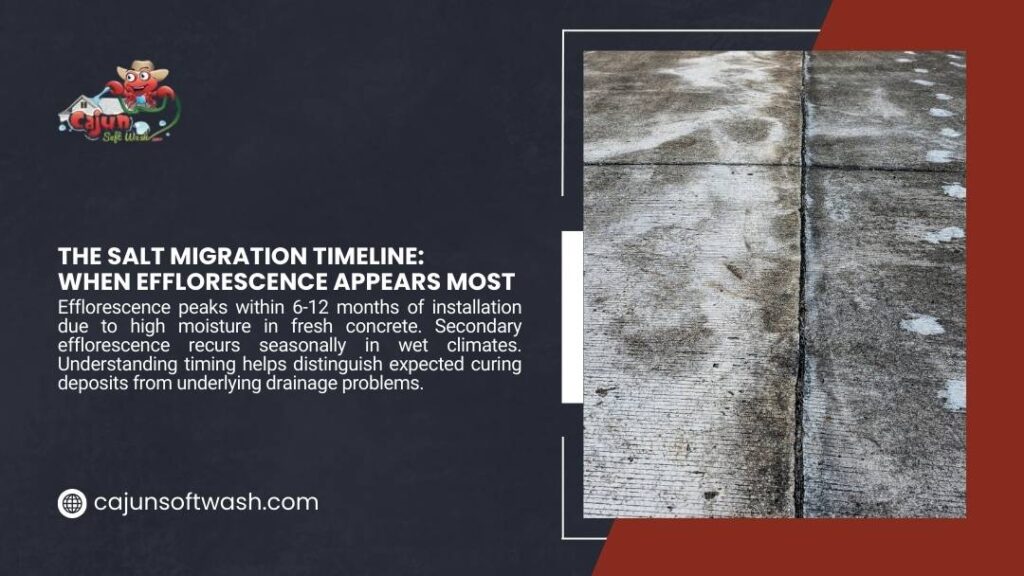
In most cases, that white residue on pavers is efflorescence, a naturally occurring mineral deposit left behind when water evaporates. However, it is important to distinguish between Primary Efflorescence (occurring during the curing process) and Secondary Efflorescence (caused by external water sources like poor drainage or leaky irrigation).
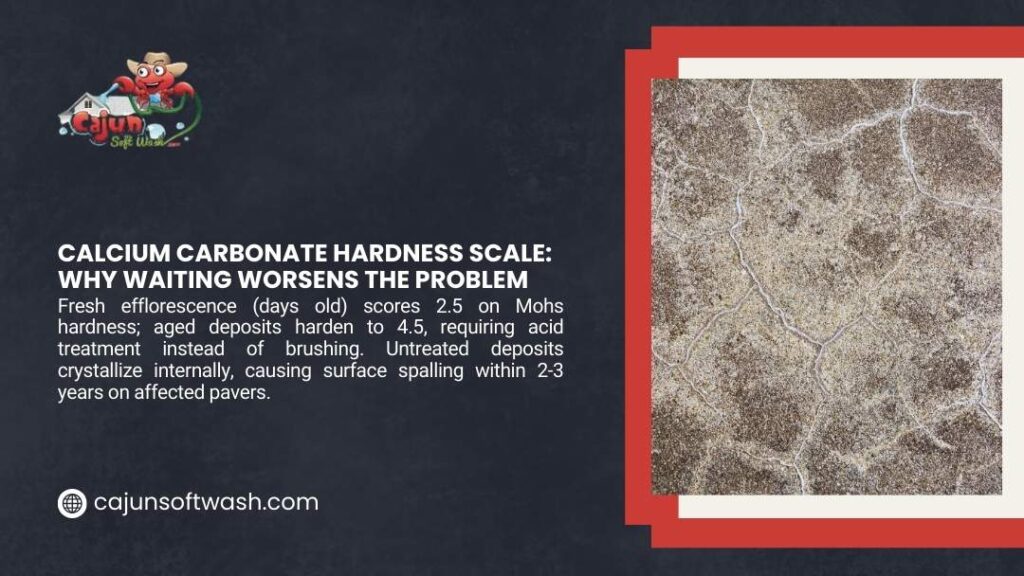
Efflorescence on pavers can resemble chalk dust, light crystals, or thin streaks. It may appear shortly after installation or months later when moisture migrates up through the base. The key detail? It’s typically not mold and not structural failure. It’s chemistry.
To avoid confusion, compare common look-alikes:
| Condition | Texture | When It Appears | Typical Cause |
| Efflorescence | Powdery/Chalky | After rain or curing | Dissolved salts + evaporation |
| Mold or Algae | Slimy/Fuzzy | Humid/Shaded areas | Organic growth |
| Sealer Haze | Milky/Plastic-like | After sealing | Trapped moisture or over-application |
| Hard Water Staining | Crusty/Ring-like | Near sprinklers | High mineral content in tap water |
If the deposit feels dry and powdery rather than slimy, you’re likely dealing with efflorescence pavers, not biological growth.
What Is Efflorescence on Pavers?
What is efflorescence on pavers, exactly? In simple terms, efflorescence is the migration of water-soluble salts to the surface of masonry materials. The Portland Cement Association explains that efflorescence forms when water dissolves salts inside concrete, carries them upward, and leaves them behind as it evaporates.
Those salts react with carbon dioxide in the air to form calcium carbonate, the same compound found in limestone. The U.S. Geological Survey confirms calcium carbonate is a naturally occurring mineral common in cement-based materials. When moisture exits the surface, calcium carbonate remains behind as white residue on pavers.
That’s why white residue on pavers is so common in concrete pavers. Cement contains compounds that, when hydrated, produce calcium hydroxide. That compound reacts with carbon dioxide and forms the white efflorescence you see.
The definition of efflorescence that concrete professionals use is straightforward: salt deposits left after water movement through porous material. The process is natural and does not indicate structural weakness.
What Causes Efflorescence on Pavers?
White residue on pavers requires three specific ingredients to form: soluble salts, moisture, and evaporation. If you remove just one of these elements, the cycle stops completely. While natural minerals are the usual suspect, modern paving mistakes in 2026 often involve the incorrect application of polymeric sand. If the fine dust from this sand is not meticulously cleared with a leaf blower before the wetting process, it creates a stubborn, milky polymer film that mimics mineral deposits but is much harder to remove.
The process typically unfolds when water from rain or irrigation seeps into the paver system and dissolves internal mineral salts. This moisture then rises through capillary action. When the water reaches the surface and evaporates, it leaves behind the white mineral efflorescence. Common triggers include poor drainage systems that trap water beneath the surface, high groundwater levels, and new installations that are still in the curing phase.
Research confirms that efflorescence is most aggressive in new concrete because of the high moisture content present during the curing stage. Environmental exposure is the final piece of the puzzle. In humid regions with frequent rainfall, the moisture migration becomes a consistent loop, explaining why some homeowners see the white residue return season after season.
| Moisture Source | Risk Level | Notes |
| New Installation Curing | High | The most common stage for white film |
| Poor Base Drainage | High | Trapped water forces salts upward |
| Irrigation Overspray | Moderate | Frequent saturation cycles |
| Heavy Rainfall | Moderate/High | Accelerates internal salt movement |
What Does Efflorescence Look Like?
Efflorescence generally manifests as a powdery white layer or a chalk-like dust that dulls the vibrant color of your stone. You might notice thin white spots on a concrete patio or a faint haze across a driveway.
In rare instances, trace minerals like iron can cause the residue to appear yellow or brown. To tell the difference between minerals and sealer failure, perform the scratch test. If the white area flakes off like dry powder when scratched with a fingernail, it is efflorescence. If it feels like a hard, plastic-like skin that won’t budge, you are likely dealing with trapped moisture under a sealer.
The texture is your best diagnostic tool. Efflorescence crystals often look fluffy or hairy immediately after a quick drying period. If the residue brushes off easily like dust, it is a mineral deposit. However, if the spots appear only when the pavers are wet and disappear when dry, you may actually be dealing with early-stage surface wear rather than mineral buildup.
Does Efflorescence Go Away?
It is a common myth that efflorescence always vanishes on its own. While natural rainfall can occasionally wash away surface salts, the cycle usually continues as long as there is salt inside the concrete and moisture moving through it.
In fact, waiting for nature to take its course can sometimes lead to calcium carbonate buildup, which hardens over time and becomes nearly impossible to remove without heavy-duty acids. If the underlying drainage issue isn’t fixed, the white spots will simply reappear after the next heavy rain.
How to Remove Efflorescence from Pavers
The best approach is to start with the Dry Method to avoid driving more moisture into the pavers. Use a stiff-bristle brush, specifically nylon or natural fiber, to sweep away as much powder as possible. You must strictly avoid using wire or steel brushes. These metal bristles leave behind microscopic fragments that will oxidize and turn into bright orange rust stains, creating a much larger aesthetic problem than the original white residue.
For moderate cases that brushing cannot fix, a specialized efflorescence cleaner is necessary. These are usually mild acids designed to dissolve calcium carbonate. A highly effective DIY alternative for 2026 is a diluted white vinegar solution, which provides enough acidity to break down the minerals without the harsh environmental impact of muriatic acid. Always test a small, hidden area first to ensure the cleaner doesn’t bleach the pigment out of your pavers.
| Method | Cost | Surface Risk | Best For |
| Dry Brushing | Low | Minimal | Light, fresh powder |
| Vinegar/Water Mix | Low | Low | Moderate DIY cleaning |
| Acidic Paver Cleaner | Moderate | Moderate | Established mineral crusts |
| Professional Stripping | High | Low | Severe polymer or sealer haze |
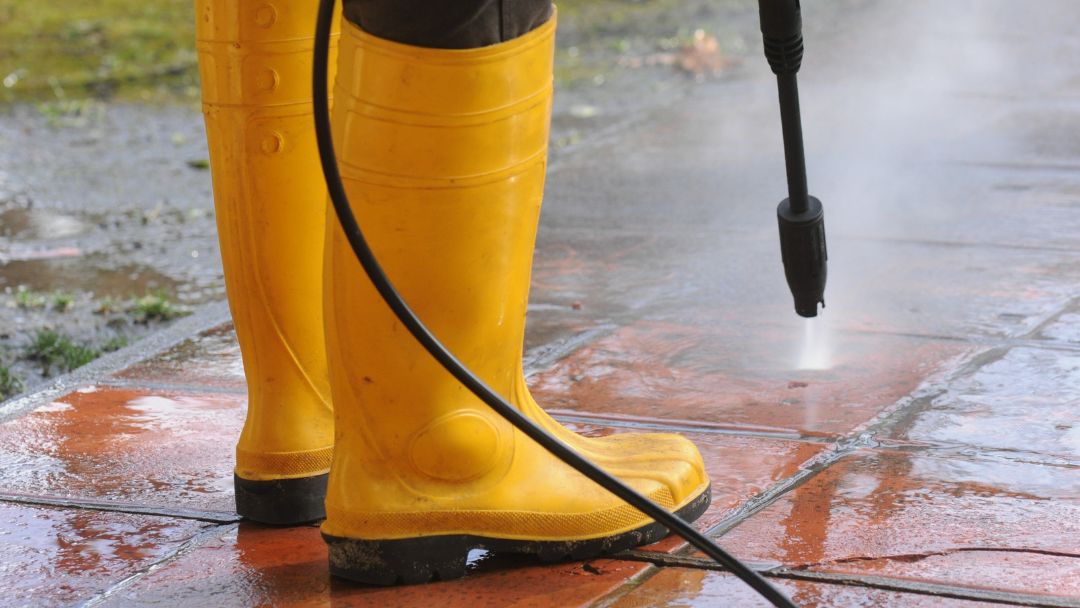
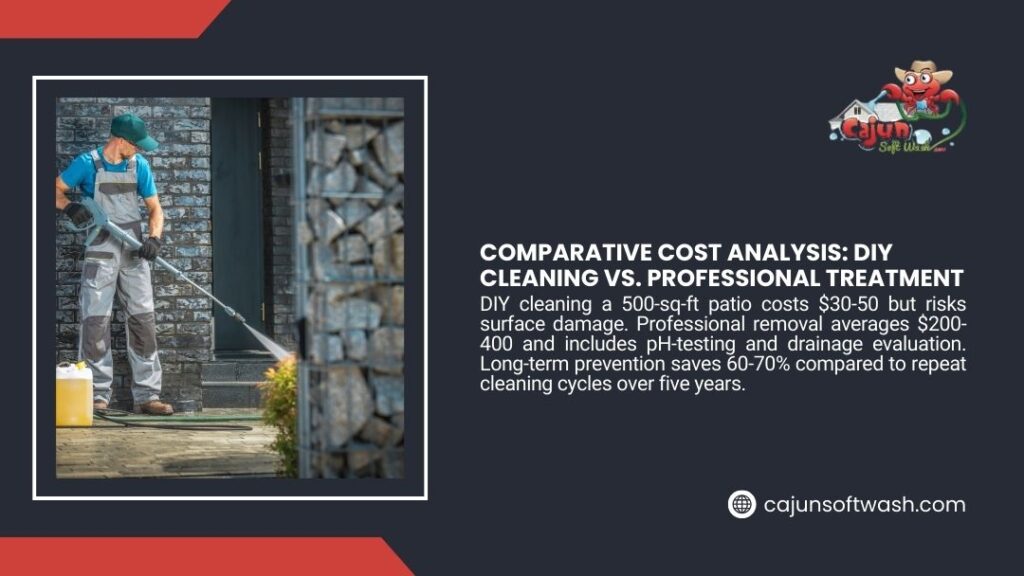
You should generally avoid high-pressure washing unless you are a professional. Excessive pressure can blast away the joint sand that stabilizes your patio and can actually force water deeper into the stone, which triggers even more efflorescence a week later. In many cases, a low-pressure soft wash combined with the right cleaning chemistry yields much safer and more permanent results.
Best Efflorescence Remover for Pavers
The best efflorescence remover for pavers depends on the severity. Non-acidic efflorescence treatment options are safer for delicate finishes. Stronger cleaners dissolve calcium carbonate more aggressively but require caution.
Look for products labeled specifically as efflorescence removers for pavers rather than generic acid cleaners. A targeted formula reduces surface risk. When selecting a remover, ensure it contains a surfactant to help the solution penetrate deep into the paver pores where the salt roots actually live.
For heavy white residue on pavers, trained technicians often combine controlled cleaning chemistry with surface-neutralizing rinses. That balance prevents damage while removing deposits. Failing to neutralize the surface after an acid wash can lead to secondary efflorescence within weeks because the acidic residue continues to react with the cement binder.
If your issue extends beyond pavers and includes white residue on concrete sidewalks or driveways, proper concrete washing methods reduce recurrence by addressing drainage and surface buildup.
Using a hot-water pressure system set to exactly 180°F can sometimes dissolve salt crystals more effectively than cold water alone, though this requires professional-grade equipment.
Why Did My Pavers Turn White After Sealing?
Pavers turned white after sealing is a separate but related problem. If the sealer is applied before the efflorescence completes its cycle, moisture can become trapped beneath the surface. That trapped moisture forces salts upward, creating cloudy white residue on pavers. This phenomenon is technically known as diffusion vapor pressure, where the sun pulls moisture up, but the plastic-like sealer membrane blocks it, causing the sealer to delaminate or turn white.
Over-application can also produce a milky haze unrelated to mineral efflorescence. Distinguishing between sealer haze and efflorescence on pavers requires inspection. Efflorescence feels powdery. Sealer haze feels smooth. One quick field test is to drop a small amount of Xylene on a white spot; if the spot disappears momentarily and then returns, you are dealing with a sealer failure rather than a mineral deposit.
Timing matters. Sealing too soon after installation increases the likelihood of visible white residue on pavers. The 90-day rule remains the gold standard for 2026, allowing the pavers to fully breathe out their initial batch of manufacturing salts before they are locked behind a protective barrier.
How to Prevent White Residue on Pavers
White residue on pavers develops when moisture carries dissolved salts to the surface and leaves them behind after evaporation. Prevention focuses on interrupting that cycle. If water cannot saturate the base or migrate upward, efflorescence pavers become far less likely to appear. The goal isn’t to eliminate naturally occurring minerals; it’s to control moisture movement. Below is a concise prevention reference designed for quick scanning.
| Prevention Step | Why It Works | When to Apply | Long-Term Impact |
| Ensure proper base drainage | Limits water saturation beneath concrete pavers | During installation | Reduces recurring white residue on pavers |
| Use quality joint sand and compaction | Minimizes water intrusion between pavers | Installation or repair stage | Stabilizes the surface and blocks moisture travel |
| Avoid overwatering landscaping | Reduces repeated saturation cycles | Ongoing maintenance | Prevents mineral migration |
| Delay sealing new pavers | Allows curing moisture to escape naturally | First 3–6 months after install | Prevents trapped white haze |
| Apply breathable sealer | Permits vapor escape while protecting the surface | After the curing period | Controls future efflorescence buildup |
| Improve the surface runoff slope | Directs rainwater away from the patio | During design or correction | Lowers the risk of moisture coming up through pavers |
| Perform routine surface cleaning | Removes early salt deposits before buildup | Annually or as needed | Preserves color and finish |
Proper drainage is the most overlooked factor. When water pools beneath pavers, it dissolves salts within the concrete matrix. As temperatures rise and evaporation begins, mineral efflorescence forms at the surface. That’s why correcting slope and runoff direction matters more than simply scrubbing the white residue on pavers once it appears.
Sealing requires patience. Many cases of pavers turned white after sealing occur because moisture was still present below the surface. A breathable, vapor-permeable sealer allows trapped moisture to escape rather than forcing salts upward.
Routine maintenance also plays a role. Light seasonal cleaning prevents minor white efflorescence from building into a visible white haze. Addressing irrigation overspray, repairing drainage gaps, and maintaining stable joint sand reduces the likelihood of recurring white residue on pavers.
Prevention works best when approached as a system. Control water movement, allow natural curing, and protect the surface properly. When those elements align, white residue on pavers becomes far less common and far easier to manage over time.
When Professional Paver Cleaning Makes Sense
If white residue on pavers keeps returning despite brushing and cleaning, deeper moisture issues may exist. Professional technicians evaluate base drainage, joint sand stability, and surface chemistry before treatment.
Advanced cleaning solutions break down calcium carbonate while protecting surrounding surfaces. Modern pros also use pH-testing strips to ensure the paver surface is returned to a neutral state (pH 7) before they leave the job site.
Comprehensive exterior home cleaning often addresses related issues at the same time. Driveways, patios, and pool decks benefit from coordinated maintenance rather than isolated spot cleaning.
Investing in a deep-steam extraction service can pull salts out from the entire thickness of the paver, which is something a standard garden hose or consumer-grade pressure washer simply cannot achieve.
FAQs about white residue on pavers
How do I prevent efflorescence from returning to my patio?
The most effective way to prevent recurring white residue is to seal the pavers with a breathable, penetrating silane-siloxane sealer after they have cured for at least 60 to 90 days. Additionally, ensuring your patio has a proper 1% to 2% slope for drainage prevents the standing water that triggers the salt migration process.
Is white residue on pavers permanent?
No. It is removable. However, recurrence depends on moisture control. If the sub-base remains saturated, the pavers will continue to ghost white indefinitely.
Can effervescence minerals damage pavers?
The process is cosmetic. Structural damage is rare. However, if the salts crystallize inside the pores, a process called subflorescence, it can lead to surface spalling or pitting over many years.
What This Means for Your Pavers
White residue on pavers isn’t random, and it isn’t a mystery. It’s a moisture-driven mineral reaction that leaves salts behind after water evaporates. Most of the time, it’s cosmetic. But if white residue on pavers keeps coming back, that’s a signal. Water is moving through the system, and the cycle won’t stop on its own.
Brushing it off might improve the look for a while, but without correcting the moisture source or using the right efflorescence treatment, the deposits often return. That’s why surface cleaning alone doesn’t always solve persistent white residue on pavers.
If your patio, driveway, or walkway is losing its color to chalky buildup, it may be time for a professional evaluation. Proper paver cleaning combined with moisture assessment prevents repeat issues and protects your investment long term.
Cajun Softwash specializes in restoring surfaces safely and effectively. If you’re tired of dealing with white residue on pavers and want it handled the right way, request a free estimate today and let trained technicians bring your hardscape back to life.