Your fence is one of the first things people see, and one of the last things most homeowners think to clean. Fence cleaning cost depends on more than just fence length. Material, age, algae load, mildew, stain condition, access, and the cleaning method all pull the final price in different directions. This guide breaks down real fence cleaning prices by material, square footage, and method, so you know what a fair quote looks like before you call anyone.
Fence Cleaning Cost at a Glance
| Fence Type / Scenario | Typical Cost |
| Small vinyl fence, light dirt | $90–$150 |
| Standard wood privacy fence (100 ft) | $150–$350 |
| Large or two-sided fence | $300–$700+ |
| Per square foot (basic wash) | $0.30–$0.60/sq. ft. |
| Soft washing (mildew/algae) | $0.40–$0.80/sq. ft. |
| Cleaning + stain prep | Add $1.00–$3.00/sq. ft. |
| Full fence staining (post-clean) | $1,000–$4,000 national avg. |
What Does Fence Cleaning Actually Cost?
Most residential fence cleaning projects fall somewhere between $90 and $500, though the price varies widely depending on what the fence is dealing with. According to industrial data, pressure washing a fence typically runs $90 to $500, with many homeowners paying around $225. A typical wood fence pressure wash for a 500-square-foot fence costs between $125 and $235.
Those ranges are honest starting points, but they’re built on national averages. In South Louisiana, the pricing story has its own wrinkle, and it starts with the climate.
Why Fence Cleaning in Baton Rouge, Gonzales, and South Louisiana Often Costs More
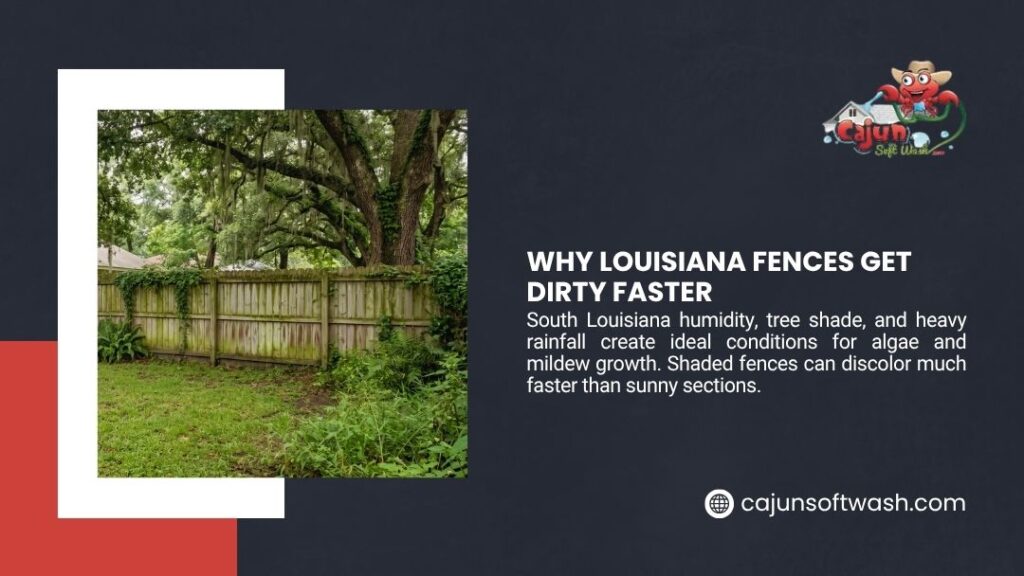
Louisiana is genuinely one of the hardest places to keep a fence clean. Long stretches of heat and humidity, heavy tree canopy, frequent rain, and slow-draining yards create near-perfect conditions for algae, mildew, and black organic staining to grow fast.
A fence in Gonzales sitting under live oaks with a damp shaded side can go from looking fine in spring to green and dingy by midsummer. The issue isn’t just cosmetic. That growth works into the wood grain, settles into vinyl seams, and eventually holds moisture against the surface in a way that accelerates weathering.
That’s why fence cleaning in this region is often more solution-based than pressure-based. A quick rinse moves surface dirt. The right cleaning formula kills the organic growth at the root, which is what keeps it from coming back in six weeks. Expect to land toward the higher end of any national pricing range when the fence is shaded, sits near drainage areas, or hasn’t been cleaned in more than a year.
Average Fence Cleaning Prices by Material
Fence material is one of the biggest cost factors, and one of the most overlooked. Vinyl usually cleans faster than wood, but it can still collect green algae in the grooves along shaded panels. Wood needs real restraint because too much pressure scars the surface, raises the grain, or strips stain in patches that are hard to fix without refinishing the whole section.
One thing contractors notice quickly: a shadowbox fence takes longer than a flat privacy fence because it has more exposed edges and hidden faces that need attention. That extra labor shows up in the quote.
| Fence Material | Typical Difficulty | Price Range | What to Know |
| Vinyl | Low to moderate | Lower–mid | Algae builds up in seams and shaded panels |
| Wood (cedar, pine) | Moderate to high | Mid–high | Needs careful pressure; the wrong method scars the boards |
| Composite | Moderate | Mid | Low-pressure approach avoids dull patches |
| Metal / wrought iron | Low to moderate | Mid | Rust and oxidation affect the method and price |
| Painted or stained | High | Higher | Extra care is needed to avoid stripping the finish |
A painted fence and a raw wood fence of the same length can carry completely different price tags; one needs careful chemistry to protect the finish, the other needs the right balance of solution and rinse pressure to avoid raising the grain. That’s why material-specific experience matters more than machine size.
Pressure Washing Cost Per Square Foot for Fences
Most fence cleaning companies price by the square foot, not the linear foot, which surprises some homeowners. Here’s the quick formula:
Fence length × height = one-sided area. Multiply by two for both sides.
So a 100-foot fence standing 6 feet tall equals 600 square feet on one side and 1,200 square feet for both sides. At the common range of $0.30–$0.60 per square foot, that’s a project landing between $180 and $720 depending on condition, method, and access.
Industrial Data lists power washing a fence at roughly $0.43 to $0.53 per square foot. Basic pressure washing at $0.30 to $0.40 and power washing at $0.35 to $0.45 per square foot for a standard 500-square-foot fence.
| Fence Size | One-Side Area | Two-Side Area | Estimated Cost ($0.30–$0.60/sq ft.) |
| 50 ft × 6 ft | 300 sq. ft. | 600 sq. ft. | $90–$360 |
| 100 ft × 6 ft | 600 sq. ft. | 1,200 sq. ft. | $180–$720 |
| 150 ft × 6 ft | 900 sq. ft. | 1,800 sq. ft. | $270–$1,080 |
If a quote looks unusually low, ask whether it covers both sides. Some companies quote one side only, which can cut the number in half and create a surprise when the other side is added on the day of service.
What Affects the Price to Clean a Fence?
Size is where every estimate starts, but condition is what usually moves the number. A fence with light pollen sitting on a sunny suburban lot is a completely different job from a fence draped in black mildew behind a shaded yard that backs up to a drainage ditch. Both might be 150 feet long. They won’t cost the same.
Here’s what actually changes the quote:
Surface condition: Fresh algae wipes off. Old algae works into the grain and needs pretreatment, dwell time, and a proper rinse to clear. The heavier the growth, the more labor and chemistry are involved.
Material: Softer woods may need lower PSI settings, while vinyl and metal can handle higher pressure. That difference in approach changes the time and technique on-site.
Access: A straight fence with open yard space cleans fast. One tucked behind overgrown shrubs, garden beds, pool equipment, or a narrow side yard takes longer. Every obstacle the crew has to work around adds time.
Both sides vs. one: Cleaning both sides of a privacy fence can double the cleanable area. If the back side faces a neighbor’s property or a tight easement, access gets harder, too.
Louisiana climate: Shaded fences near Baton Rouge, Gonzales, or Denham Springs can accumulate mildew so consistently that water pressure alone doesn’t hold the results for long. In those cases, a cleaning solution formulated for organic growth does the real work.
Soft Wash vs. Pressure Wash: Which One Is Right for Your Fence?
Pressure washing and soft washing are not interchangeable, and treating them as the same service is where a lot of fences get damaged.
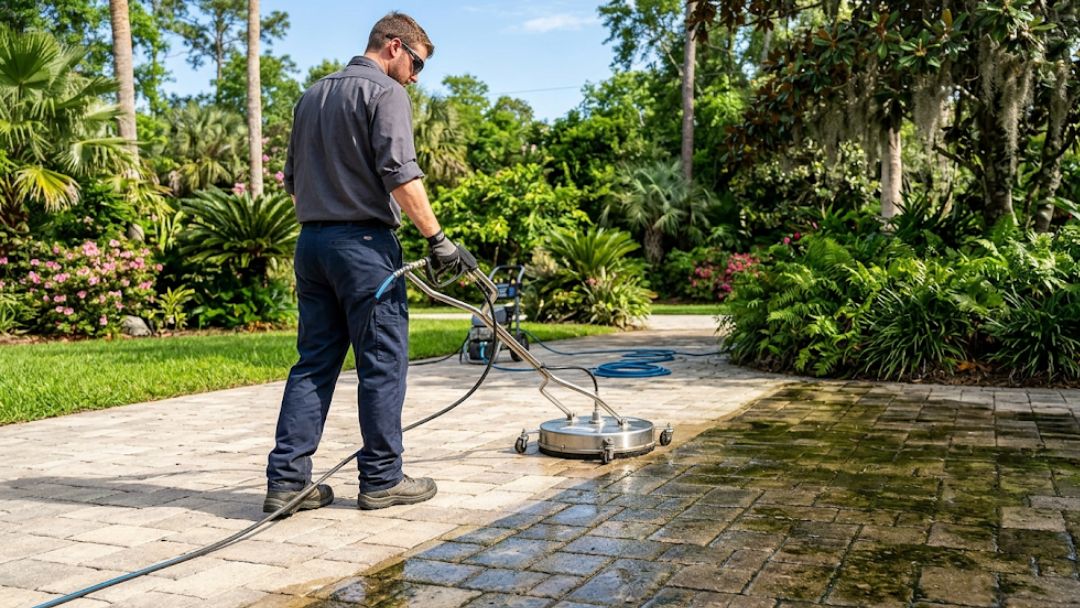
Pressure washing relies on water force to dislodge dirt. It works well on durable surfaces like concrete or metal. On wood, it’s a different story. High pressure held too close to a cedar or pine board can leave permanent stripe marks, splinter the surface, or gouge the grain in a way that stains won’t cover evenly. If you are comparing methods, understand the difference between soft wash vs. pressure wash why low pressure is often safer for delicate exterior surfaces.
The CDC warns that the strong spray from a pressure washer can cause serious wounds that might appear minor at first, a reminder that the equipment is more powerful than it looks, even on a Saturday afternoon fence project.
Soft washing uses low pressure, closer to a garden hose, with a cleaning solution formulated to break down algae, mildew, and organic growth at the root before rinsing it away. The chemistry does the work. The rinse just clears what the solution already loosened.
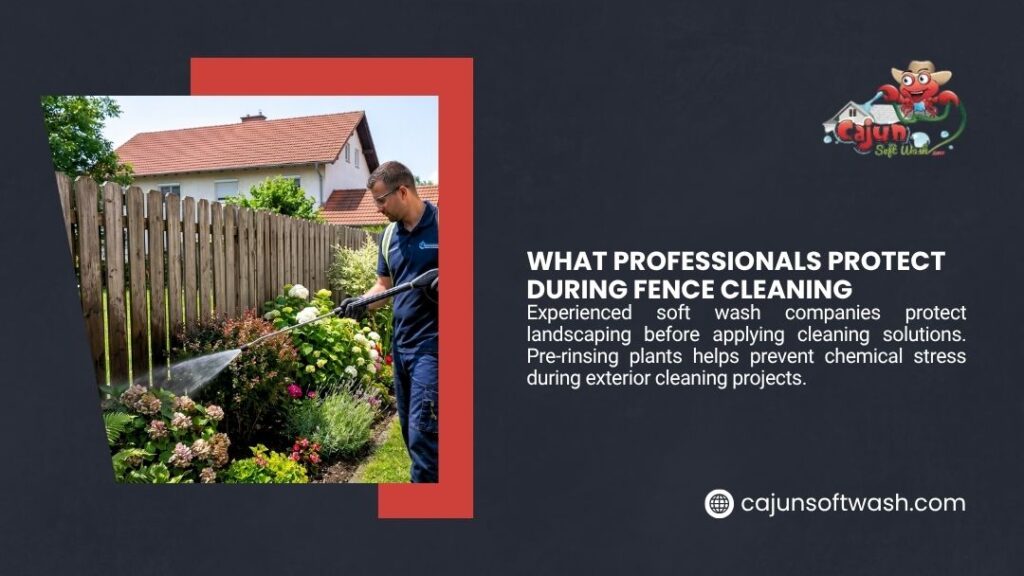
Cajun Softwash uses soft washing specifically because of what Louisiana’s climate does to exterior surfaces. Their technicians mix solutions on-site based on the specific surface and growth type, not a one-size-fits-all approach. They also take time to pre-rinse and protect nearby plants before any solution is applied, which matters when the fence runs along a garden bed or landscaped border.
When NOT to Pressure Wash a Fence
Some fences should not be pressure-washed, at least not with standard settings. Here’s when to ask about soft washing instead:
Old or weathered wood: Boards that are already graying, soft in spots, or showing signs of moisture damage don’t need more force. They need chemistry and low pressure that cleans without stressing the wood further.
Loose or peeling stain: High pressure on a fence that’s already peeling stain will strip more than intended and leave a patchy surface that’s harder to restain evenly.
Painted fences: Paint protects the wood underneath, but aggressive pressure can lift it in sheets. Once that happens, the fence needs repainting before it looks right, which adds cost.
Soft pine or untreated wood: These materials splinter under high-pressure contact. The damage may not be obvious immediately, but it shows up when the boards start absorbing more moisture through the opened grain.
Fences near delicate plants: Pressure spray can shred leaves and disturb shallow root systems. A soft wash approach allows better control of where the solution and rinse water go.
Composite fencing: Manufacturer guidelines on many composite products specify low-pressure or hand-washing only. Exceeding those limits can void the product warranty or leave dull, discolored patches.
Fence Cleaning Cost by Cleaning Method
The method chosen changes the labor, equipment, and time involved, which changes the price. A crew that pressure washes everything the same way, regardless of material, is fast. Whether the fence survives that speed is a different question.
A good technician looks at the fence before touching it, including the material, growth type, stain condition, and what’s growing nearby. The method follows that assessment, not the other way around.
| Cleaning Method | Best For | Typical Price Level | Surface Risk |
| Basic rinse and brush | Light dirt, pollen, small touch-ups | Low | Low |
| Pressure washing | Vinyl, metal, and newer durable fencing | Mid | Medium (high on wood) |
| Soft washing | Wood, painted, stained, mildew-heavy fences | Mid–high | Lower |
| Power washing | Tough grime on durable surfaces | Mid–high | Higher on wood or older finishes |
| Clean + stain preparation | Wood fences before stain or sealant | Higher | Depends on prep quality |
If the fence is part of a bigger exterior project, bundling services often reduces the per-visit cost. Cajun Softwash handles residential exterior cleaning services for homeowners who want more than one surface cleaned during the same visit. Fence, driveway, patio, and house washing can often be scheduled together.
How Much Does It Cost to Stain a Fence After Cleaning?
A lot of people search for fence cleaning cost because staining is the real goal. That’s smart sequencing. Stain applied over dirt, mildew, algae, or gray oxidation doesn’t bond the way it should. The result often looks uneven, darker in some spots, barely there in others, and it fails sooner than a properly prepped surface would.
Industrial reports the national average to paint or stain a fence ranges from $1,000 to $4,000, with many homeowners paying around $2,000 for a larger privacy fence project after washing. The cleaning is a fraction of that cost, but skipping it, or doing it poorly, can show up in the finished stain job and require a redo.
If the fence has deep mildew, old peeling stain, or soft boards, those issues need to be addressed before the stain is applied. A fence that looks clean after a rinse may still have mildew residue in the grain. Stain will seal that in, not cover it up.
Cleaning before staining also gives a clearer picture of which boards need repair. That’s a better time to find a soft spot than after a coat of stain has already gone on. If your fence connects to a deck or other outdoor wood surface, understanding deck washing and exterior wood care can help you understand why prep matters before stain or sealant.
DIY vs. Hiring a Professional
Renting a pressure washer and cleaning the fence yourself looks like a money-saver until something goes wrong. The math changes fast when the wrong nozzle leaves stripe marks down every other board, or a harsh cleaner burns a line of flowers along the base, or a narrow spray tip splits a board that was already soft from moisture.
For a small vinyl fence with light surface dirt, DIY is probably fine. For anything older, stained, painted, or covered in real mildew, hiring a professional is the more practical call. Not because the job is impossible, but because the stakes of getting it wrong are higher than the cost of the service.
| Option | Estimated Cost | Best For | Main Risk |
| DIY cleaner and brush | $20–$60 | Small vinyl fences, light dirt | Labor-intensive, uneven results |
| Rented pressure washer | $40–$100/day | Durable surfaces, minor grime | Wrong PSI or nozzle damage |
| Purchased washer | $150–$500+ | Frequent use | Storage, learning curve |
| Professional service | $90–$500+ | Most fences are safer, faster | Choosing the wrong company |
The companies worth hiring don’t just show up and spray. They inspect the fence first, choose the method based on what the surface actually needs, protect nearby plants, and explain what to expect as the fence dries.
Why Fence Cleaning Prices Near You Can Vary So Much
Search pressure washing near me prices, and you’ll get a wide spread, sometimes $90, sometimes $500, sometimes higher. That range isn’t random. Labor rates, travel distance, insurance requirements, equipment quality, and job minimums all affect what a company charges locally.
In Louisiana specifically, fence condition adds another layer. A fence near trees, damp soil, or a low-lying yard may need a cleaning solution rather than water force alone. A fence near a pool may deal with water spots, algae, and chemical residue simultaneously. A fence on a corner lot with road-facing panels accumulates dust and grime differently than a fully shaded backyard fence.
The quote should reflect those conditions, not a generic price pulled from a national average table.
Companies also structure pricing differently. Some charge by square foot. Some use linear footage. Most set a minimum service charge because even a 30-minute fence job still requires drive time, setup, hoses, solution mixing, rinsing, and cleanup. A minimum charge isn’t a red flag, it’s how professional service businesses cover the real cost of showing up.
Is Fence Cleaning Worth the Cost?
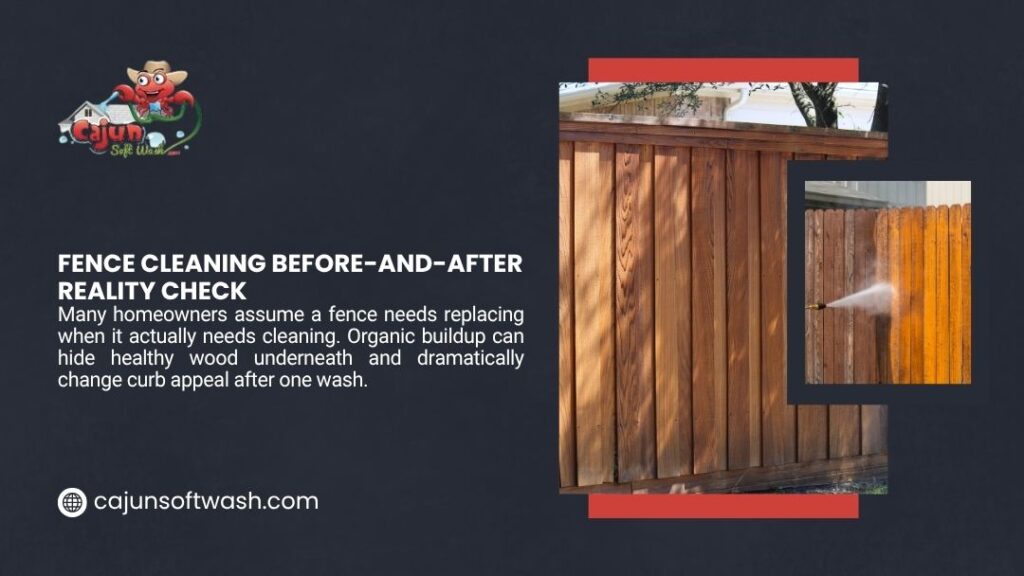
For most fences that still have useful life left, yes, cleaning is worth it. The bigger question is what the fence actually looks like under the dirt. Algae and mildew can make sound boards look worn out, and that leads homeowners toward replacement conversations when a proper wash would have been the answer.
In South Louisiana, especially, a gray or green-looking fence is almost always a cleaning problem before it’s a replacement problem. Vinyl holds up well structurally, it just collects algae along seams and shaded sections that make it look like it’s failing. Wood fences look weathered when organic growth is sitting on the surface. Remove that layer, and the boards underneath often tell a completely different story.
Cleaning also has a downstream benefit: it shows you what actually needs repair. A fence that looks uniformly bad after a rinse has a soft board problem. One that cleans up evenly is in good shape. That information is worth something before spending thousands on stain or replacement.
For curb appeal, the combination of a clean fence alongside clean siding, concrete, and patio makes the property feel cared for in a way that any single surface cleaned alone doesn’t achieve.
How to Compare Fence Cleaning Quotes
A good quote explains what you’re actually paying for. Before agreeing to any fence cleaning estimate, confirm it covers:
- One-sided or two-sided cleaning (ask explicitly, this can double the price)
- Both fence height and length are in the scope
- Cleaning method, pressure, power, or soft wash, and why that method was chosen
- Pretreatment if algae or mildew is present
- Plant and landscaping protection
- Insurance, workers’ comp and general liability (ask for proof, not just confirmation)
- Stain prep if that’s part of the plan, and whether a brightener or wood conditioner is included
A quote that’s just a number with no details attached is a starting point for surprises, not a service agreement.
Fence Cleaning FAQs
How much does it cost to pressure wash a fence?
Most residential projects cost between $90 and $500, with standard jobs near $125 to $300. The final price depends on length, height, material, buildup, access, and whether one or both sides are included.
How much does it cost to pressure wash a fence per square foot?
The common range is $0.30 to $0.60 per square foot. Heavy mildew, soft washing, and stain preparation push that higher. A two-sided 100-foot privacy fence covers 1,200 square feet — significantly more than a one-sided quote covers.
Is soft washing better than pressure washing for a wood fence?
Usually yes, especially for older wood, stained boards, painted surfaces, or any fence with visible mildew or algae. Soft washing uses lower pressure and a cleaning solution that treats organic growth rather than just blasting it. That protects the surface and produces longer-lasting results.
Can pressure washing damage a fence?
Yes. Too much pressure, a nozzle held too close, or a tip that’s too narrow can leave permanent stripe marks, raise the grain, splinter boards, or strip stain unevenly. Wood fences are especially vulnerable. The damage may be subtle at first and more obvious once the fence dries.
How often should a fence be cleaned in Louisiana?
Most fences benefit from cleaning every 12 to 24 months. Shaded fences in Baton Rouge, Gonzales, Prairieville, and Denham Springs may need service sooner because humidity and tree cover accelerate algae and mildew growth.
Should I clean my fence before staining it?
Yes, always. Stain needs a clean, dry surface to bond properly. Mildew, oxidation, or old pollen left on the boards causes the finish to look patchy and fail earlier than it should.
Is fence cleaning priced by linear foot or square foot?
Most professional companies price by square foot because it accounts for both the length and height of the fence. Linear footage ignores height, which makes a 4-foot picket fence look the same as a 6-foot privacy fence on paper. When comparing quotes, ask which measurement the company is using so the numbers are comparable.
Does fence cleaning include both sides of the fence?
Not always, and this is one of the most common sources of quote confusion. Some companies include only one side in a base price. If your fence has mildew on the back or needs to be prepped for staining on both faces, confirm explicitly that both sides are in the scope before work begins.
Can I bundle fence cleaning with driveway or house washing?
Yes, and it often makes financial sense to do so. When a crew is already on-site with equipment set up, adding the driveway, patio, or house washing to the visit can reduce the per-surface trip cost. Cajun Softwash handles residential exterior cleaning packages that can include fence, concrete, and house washing in a single visit, ask about bundling when you request your estimate.
Get a Clear Fence Cleaning Price Before the Grime Gets Worse
Fence cleaning cost isn’t a fixed number. It moves with material, condition, access, square footage, and whether the fence needs a quick surface wash or a deeper treatment for mildew and organic growth. A fair quote reflects the actual fence in front of the technician, not a national average from an online calculator.
If your fence looks gray, green, or dull, the problem is almost certainly cleaning, not replacement. The right wash can bring back the original color, prepare the surface for stain, and give you a clear picture of what the boards actually look like underneath the buildup.
For homeowners in Baton Rouge, Gonzales, Prairieville, Denham Springs, and nearby Louisiana communities, Cajun Softwash offers a safer, low-pressure alternative to standard pressure washing. Their technicians use surface-specific solutions, protect nearby plants during every job, and give you a clear estimate based on what your fence actually needs, not a generic price range.
Request your free fence cleaning estimate from Cajun Softwash today. Your fence is worth more than a quick blast and a bill. Clean it right, and it will show.