Paver cleaning isn’t just about rinsing off dirt. It’s about removing stains, algae, and white residue without disturbing joint sand or damaging the surface. This guide shows how to clean pavers safely, avoid joint sand loss, handle stains and white residue, and choose the right method for patios, walkways, pool decks, and driveways, without wrecking the finish.
Professional Paver Cleaning That Protects Your Investment
Paver cleaning plays a major role in protecting outdoor living spaces. Paver cleaning is not about blasting away dirt and hoping for the best. It’s about restoring patio pavers, walkways, and driveways while protecting joint sand, surface color, and structural stability. Concrete pavers and brick surfaces are designed to withstand traffic, not careless cleaning. The difference matters.
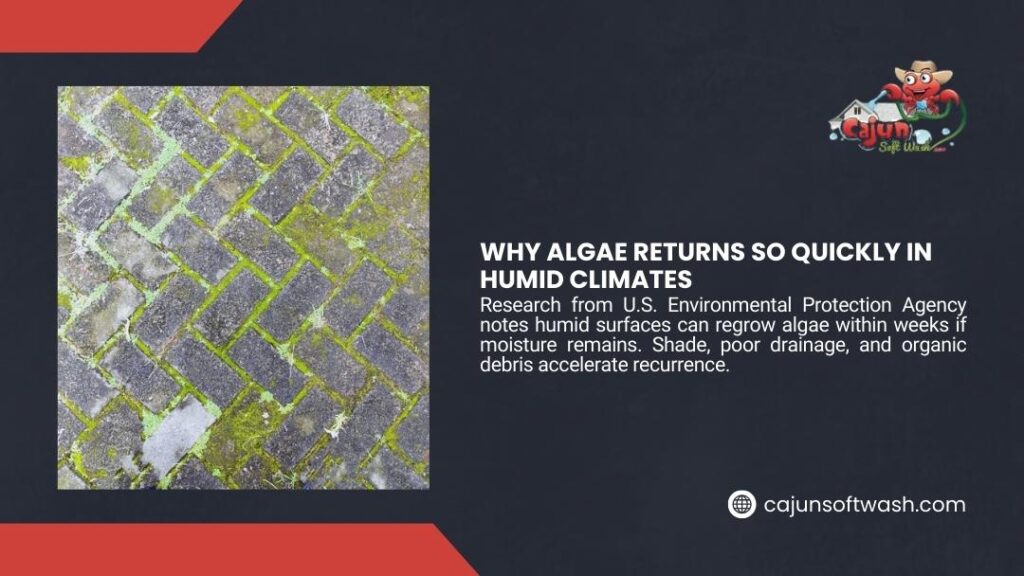
In humid regions, moisture accelerates algae growth and surface staining. According to the U.S. Environmental Protection Agency, damp conditions encourage mold and organic buildup on exterior hardscapes, increasing slip hazards. That matters in areas like Louisiana, where mold growth and algae thrive. Regular paver cleaning reduces that risk while preserving curb appeal.
When done correctly, cleaning pavers removes grime, prevents premature wear and tear, and extends the life of your outdoor living space.
What Makes Pavers Look Dirty in the First Place
Not all discoloration is the same. Before choosing a paver cleaner solution, it helps to identify the source.
| Problem Type | Typical Cause | Visual Clue | Recommended Approach |
| Organic growth | Moisture, shade | Green or black film | Gentle wash or soft treatment |
| Efflorescence | Salt migration | White residue | Targeted mineral cleaner |
| Oil & grease | Vehicles, grills | Dark blotches | Absorbent + degreaser |
| General soil | Dust & foot traffic | Dull surface | Mild detergent wash |
Concrete pavers are porous. Brick paver maintenance often requires slightly different care because fired clay reacts differently to cleaning agents. Stone patio cleaning depends on the stone type, as natural limestone is softer than manufactured pavers.
Paver types and why the material changes the method
Pavers don’t all behave the same, so paver cleaning should change based on what the surface is made of.
| Paver type | Common locations | What it’s most sensitive to | Best paver cleaning approach |
| Concrete pavers | Patios, driveways, walkways | Deep absorption of oil, algae staining, and white residue on pavers | Pre-wet, use a mild paver cleaner solution for general soil; spot-treat stains; rinse thoroughly to prevent haze |
| Brick pavers (clay) | Patios, garden paths, courtyards | Color shift from harsh chemicals, surface scuffing from aggressive brushing | Start with a gentle wash and nylon brush; avoid harsh acids; test any patio paver cleaner in a hidden area first |
| Natural stone pavers | Patios, pool decks, outdoor living areas | Etching or dull patches from acidic cleaners; uneven tone if chemistry dries on the surface | Use pH-neutral cleaning solutions; keep dwell time short; rinse fully and avoid “vinegar on pavers” unless the stone type allows it |
| Tumbled or textured pavers | Patios, decorative areas | Trapped grime in texture; streaking from uneven rinsing | Apply cleaner evenly, scrub with a stiff nylon brush, rinse in consistent passes so residue doesn’t redeposit |
| Sealed pavers (any material) | Any hardscape with a protective coating | Clouding, peeling, or patchy gloss if the wrong chemical is used | Use mild detergent first; avoid strong solvents; if the finish looks uneven, stop and spot-test before continuing |
Once you match the method to the material, paver cleaning gets easier, and the risk of damaging the pavers drops fast.
How to Clean Pavers: The Safest Baseline Method
If you’re wondering how to clean pavers safely, here’s a step-by-step process that protects the surface without damaging the pavers.
Remove Loose Debris: Start with dry removal. Sweep well and remove leaf debris. Dirt left behind turns into grit that can scratch concrete pavers under scrubbing.
Pull Weeds and Inspect Joints: Next comes joint inspection. Pull weeds and check for low spots or loose sand. If joints already look thin, aggressive washing will only make it worse.
Pre-Wet the Surface: Lightly soak the area using a garden hose. Pre-wetting prevents the cleaning solution from absorbing too quickly into porous pavers.
Apply a Mild Cleaning Solution: Use a diluted patio paver cleaner or mild detergent, let it sit briefly, and scrub with a stiff nylon brush. Avoid wire brushes. They can scratch and leave marks you’ll keep noticing forever.
Rinse Thoroughly: Rinse completely to remove residue. A standing solution may leave streaks or dullness.
Allow to Dry and Inspect: Once dry, check for remaining stains. Repeat spot treatment only where necessary.
This method works well for routine cleaning of patio pavers, cleaning driveway pavers, and light concrete cleaning. It remains the best way to clean pavers when heavy equipment is unnecessary.
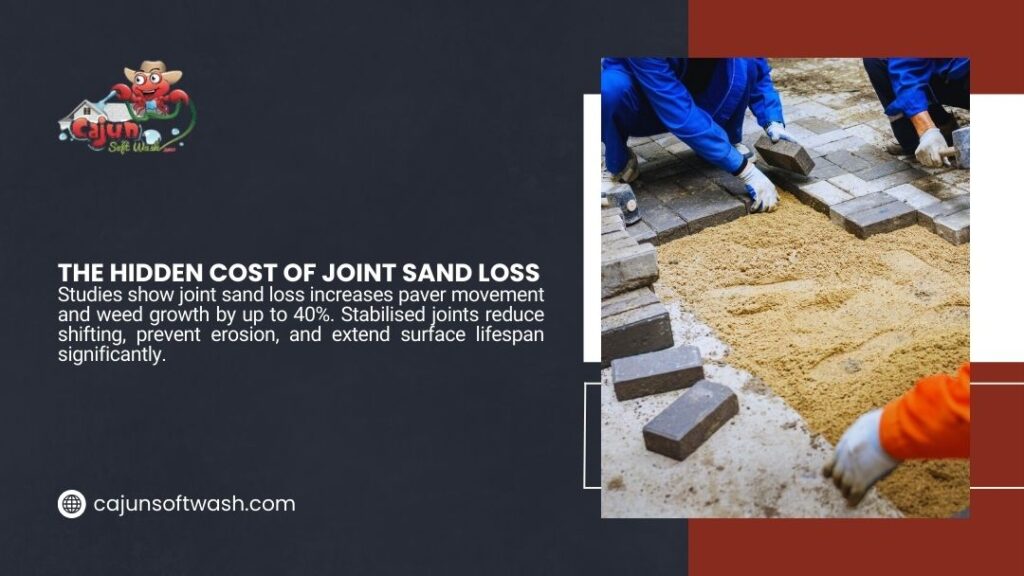
How to Clean Pavers Without Power Washing
People search for how to clean pavers without power washing because they’ve seen joint sand vanish like it owes somebody money. They’re not wrong to worry. Pressure washing patio pavers can cause joint loss, surface etching, and color shift, especially on older or softer pavers.
Manual cleaning is slower, but it gives you control. For organic growth, oxygen-based cleaners often work well on many surfaces with less risk than straight chlorine bleach, though plant protection still matters. Pre-wet, apply evenly, allow dwell time, scrub, rinse fully. If stains persist, don’t just scrub harder. Switch tactics.
If your pavers sit near other delicate exterior surfaces, it helps to understand why lower pressure prevents damage across the property. For a broader understanding of surface-safe cleaning, understand soft washing principles and learn why reduced pressure prevents damage
Pressure Washing Patio Pavers: Safe Settings and Technique
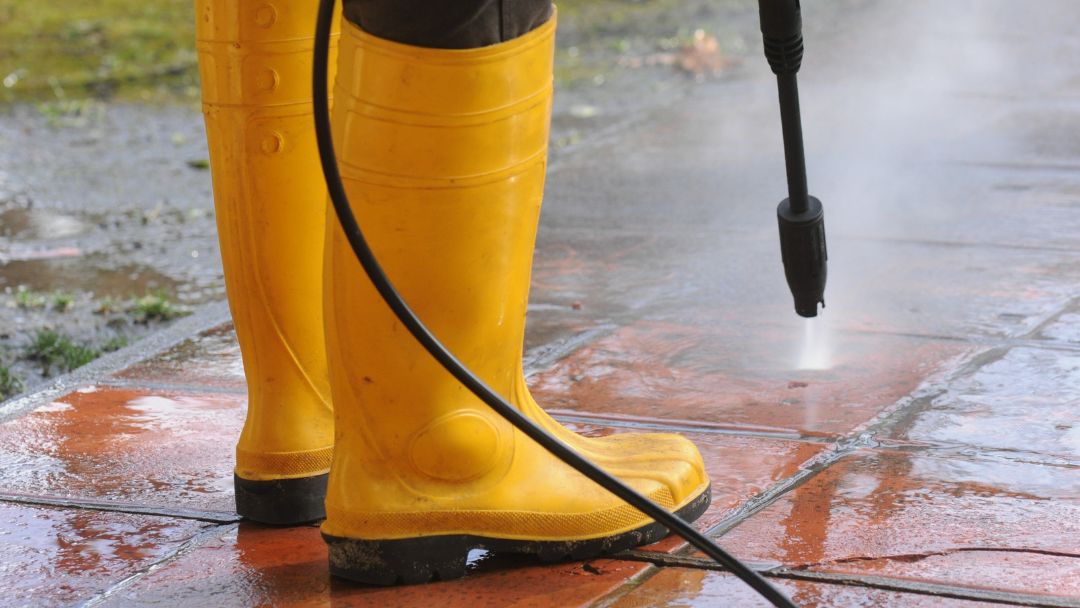
Can you power wash pavers? Yes. Should you do it like you’re stripping paint? Absolutely not.
| Pressure washing choice | Safer move for paver cleaning | What goes wrong when ignored |
| Pressure level | Start low, test a small area first | High pressure etches and stripping joints |
| Nozzle type | Wide fan tip, not a tight jet | Tight jets cut trenches and leave stripes |
| Wand angle | Angle the spray, don’t shoot straight down | Straight-down spray excavates joint sand |
| Distance | Keep a steady, moderate distance | Too close creates “hot spots” and gouges |
| Motion | Smooth passes, no lingering | Stopping leaves burn lines and uneven tone |
| Runoff control | Rinse away from cleaned areas | Dirty water dries into haze and streaks |
After pressure washing pavers, let the surface dry and check joints. If you see low joints, top up sand once dry. Skipping joint repair is how paver cleaning turns into weeds, ants, and shifting blocks later.
For surfaces connected to driveways or large hardscape areas, properly understanding concrete washing techniques, it can help avoid uneven cleaning
Paver Cleaner Solutions: What to Use and What to Avoid
Choosing the right paver cleaning solution depends on the stain type and material. Concrete pavers, brick, and natural stone respond differently to chemicals. Using the wrong product can discolor or weaken the surface.
Before selecting a paver cleaner solution, consider stain origin, surface porosity, and nearby landscaping.
| Cleaner Type | Suitable For | Use With Caution | Avoid When |
| Mild detergent | General dirt and dust | Rinse thoroughly | Heavy oil stains |
| Oxygen-based cleaner | Organic growth | Protect plants | Deep mineral deposits |
| Degreaser | Oil and grease | Spot test first | Sealed surfaces without testing |
| Vinegar solution | Light efflorescence | Dilute carefully | Limestone or sensitive stone |
| Chlorine bleach | Mold removal | Highly diluted use only | Frequent maintenance cleaning |
The vinegar question shows up constantly: clean pavers with vinegar, removing mould from pavers with vinegar, and vinegar on pavers. Vinegar can help in some mineral-haze situations, but it can also backfire, especially on certain stones or colored finishes. If you’re trying to remove efflorescence from pavers with vinegar, the bigger issue is usually moisture movement. Acid on top doesn’t stop salts from migrating up again.
If you’re seeing stubborn dark speckling that looks like it’s part of the surface, it may match what homeowners call black spots. This helps you identify what you’re dealing with before you throw random chemicals at it. Selecting the best cleaner for pavers means understanding the material first. When in doubt, testing a small inconspicuous area reduces risk.
White Residue on Pavers: Understanding Efflorescence
White residue on pavers, known as efflorescence, forms when moisture dissolves natural salts inside concrete and carries them to the surface. As water evaporates, salts remain behind.
The Portland Cement Association confirms that efflorescence is common in new concrete installations and areas exposed to frequent moisture cycles. It does not necessarily indicate structural failure, but it affects appearance.
Efflorescence often appears after installation or heavy rainfall. The best way to clean concrete pavers affected by mineral deposits involves:
- Pre-wetting the surface
- Applying a manufacturer-approved efflorescence cleaner
- Allowing short dwell time
- Rinsing completely
Repeated washing without addressing drainage issues may result in recurring residue. Ensuring proper slope and reducing standing water helps prevent future buildup.
Cleaning Brick Patio and Concrete Pavers by Stain Type
Different stains require tailored solutions.
| Stain | Best Way to Clean Brick Pavers | Notes |
| Oil | Absorbent powder + degreaser | Repeat treatment for old stains |
| Rust (stains often come from metal furniture, fertilizer, grill drips, or irrigation water) | Masonry-safe rust remover | Spot test first |
| Mold | Oxygen-based cleaner | Protect nearby plants |
| Tire marks | Mild detergent scrub | Avoid harsh solvents |
For properties in humid areas, algae growth in humid climate conditions accelerates staining. Louisiana humidity and exterior cleaning considerations often require more frequent maintenance.
Paver Cleaning in Louisiana: Why Climate Changes Everything
Louisiana’s climate changes how often and how carefully paver cleaning should be done. High humidity, frequent rainfall, and long warm seasons create ideal conditions for algae and mildew to grow on hard surfaces. Even when pavers look dry, moisture can remain in joints and shaded areas.
In humid regions like Baton Rouge and surrounding communities, paver cleaning is often less about appearance and more about control. Organic growth returns faster. White residue from mineral movement appears more often after heavy rain. Shaded patios stay damp longer, especially near irrigation systems.
This climate reality means homeowners in Louisiana typically clean patio pavers more frequently than those in drier states. It also means gentle, surface-safe cleaning methods are especially important. Aggressive pressure washing may remove growth quickly, but it can damage joint stability and open pores that allow faster regrowth.
The key in Louisiana is consistency. Light, controlled cleaning done regularly works better than waiting too long and using harsh methods. Managing water flow, limiting standing moisture, and keeping organic debris off the surface all reduce how often deep paver cleaning is required.
When to Consider Professional Paver Cleaning Near Me
There are situations where DIY paver cleaning becomes impractical. Large patios, extensive driveway wash projects, or deep oil penetration often require commercial-grade equipment and experience.
Professional paver cleaning services provide controlled pressure, surface-safe chemicals, and proper joint stabilization after cleaning. Incorrect pressure washing of patio pavers can remove joint sand and cause uneven settling.
For homeowners also managing surrounding surfaces like fences or driveways, integrated fence cleaning or driveway wash services may streamline maintenance.
Commercial property managers often benefit from coordinated commercial exterior cleaning to maintain a consistent presentation across walkways, parking areas, and entryways. Choosing a professional reduces the risk of damage and ensures the best way to clean paver patio surfaces without compromising durability.
Related Surface Care
Paver cleaning often connects to broader exterior maintenance. Pool deck cleaning, deck washing, and patio cleaning prevent runoff stains and uneven surface aging.
Maintaining the surrounding areas reduces cross-contamination. For example, algae growth on adjacent siding can spread to the hardscape. Understanding exterior home cleaning principles ensures consistent care across materials.
Concrete surfaces next to pavers may require specialized concrete washing to maintain a uniform appearance. Comprehensive surface maintenance supports the longevity of your entire outdoor living environment.
FAQs About Paver Cleaning
Can you pressure wash pavers?
Yes, you can pressure wash pavers, but it must be done carefully. Use the lowest effective pressure, a wide fan tip, and hold the spray at an angle rather than straight down into the joints. High pressure can strip joint sand, etch the surface, and leave visible streaks. If you’re unsure about the correct settings, manual cleaning or professional paver cleaning is safer.
What is the best cleaner for pavers?
The best cleaner for pavers depends on the stain type and material. For general dirt, a mild detergent or pH-neutral cleaner works well. For algae or mildew, an oxygen-based cleaner is usually effective. Oil stains require a masonry-safe degreaser. White residue may need a mineral-specific efflorescence cleaner. The safest approach is to match the cleaner to the problem rather than using the strongest product available.
How do you remove white haze from pavers?
White haze on pavers is often efflorescence, caused by salts rising to the surface as moisture evaporates. To remove it, pre-wet the surface, apply a masonry-safe efflorescence cleaner according to label instructions, allow a short dwell time, and rinse thoroughly. If the haze returns, check for drainage or irrigation issues, as moisture movement is usually the underlying cause.
How often should pavers be cleaned?
Most pavers should be cleaned once or twice per year. Shaded patios, damp areas, and pool decks may need cleaning more often due to algae growth. Driveways may require occasional spot treatment for oil or tire marks. Regular maintenance prevents deep staining and reduces the need for aggressive cleaning methods later.
Does cleaning remove joint sand?
Yes, cleaning can remove joint sand if high pressure is used or if the spray is directed straight into the joints. Manual cleaning with a garden hose usually preserves joint sand. If pressure washing is necessary, use moderate settings and inspect joints afterward. If sand levels drop, re-sanding once the surface dries will help maintain stability.
Keeping Your Pavers Clean for the Long Run
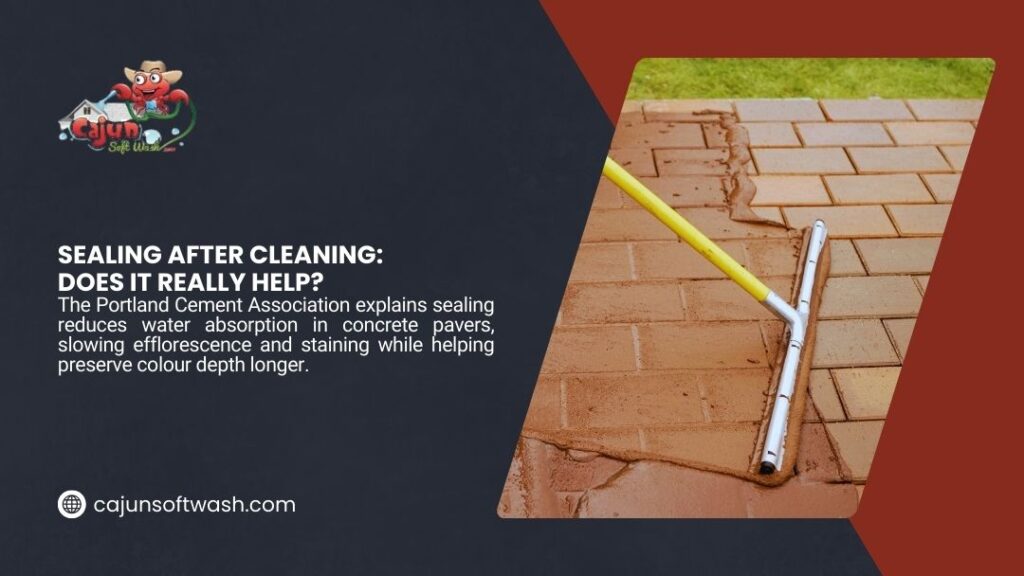
Paver cleaning done correctly preserves structural integrity and visual appeal. Gentle washing methods prevent joint erosion. Appropriate paver cleaner solutions protect surface color. Routine maintenance reduces costly repairs.
Cajun Softwash has served Louisiana homeowners and businesses since 2013 with surface-safe cleaning solutions designed for humid climates. Their low-pressure techniques remove algae, mold, and buildup without damaging delicate materials. Whether you need patio paver cleaning, driveway wash, or full exterior restoration, experienced technicians evaluate each surface before treatment.
If your patio or driveway shows staining, white residue, or algae growth, scheduling a professional assessment can prevent long-term damage. Request a free estimate through Cajun Softwash to restore your pavers safely and protect your investment for years to come.