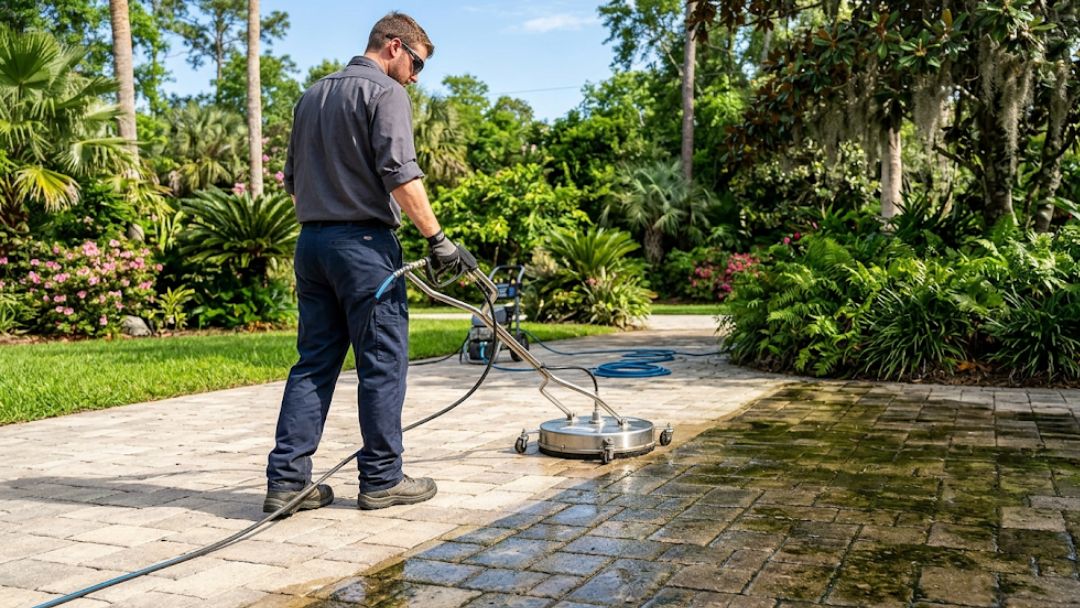
Most homeowners pay between $100 and $250 to have a standard residential deck professionally cleaned, but that number shifts fast. Size, surface material, algae load, access, and whether you need soft washing, sealing, or staining all pull the price in different directions.
In this guide, we break down real deck cleaning costs by square footage, surface type, and add-on service so you know exactly what to expect before you call anyone.
Deck Cleaning Cost at a Glance
Deck cleaning cost is often priced by the job, not just by square footage. A small deck may still have a minimum service charge because the crew has to travel, prepare the area, mix cleaning solutions, protect nearby surfaces, clean the deck, rinse properly, and pack up. That is why two decks with the same square footage can have very different quotes.
| Deck Size | Typical Cost | Notes |
| Small (up to 200 sq. ft.) | $100–$175 | Light dirt, ground level |
| Medium (200–400 sq. ft.) | $150–$300 | Most residential backyards |
| Large (400–700 sq. ft.) | $250–$500 | Pool decks, wraparound styles |
| Extra-large or multi-level | $500+ | Stairs, railings, heavy buildup |
| Per square foot (basic wash) | $0.30–$0.70 | Varies by method and condition |
| Soft washing | $0.40–$0.90/sq. ft. | Safer for wood and coated decks |
| Cleaning + sealing | $1.00–$5.00/sq. ft. | Full surface protection |
| Cleaning + staining | $2.00–$7.00+/sq. ft. | Includes dry time and prep |
The average deck cleaning cost should include more than a quick rinse. A good quote should account for the deck’s age, coating, wood grain, algae level, drainage, furniture removal, and the cleaning method. If the quote sounds unusually cheap, ask what is included. A low price may not cover railings, stairs, pretreatment, post-rinse care, or plant protection.
For homeowners who search “deck cleaning near me” or “deck cleaning service,” the better question is not only who is close by. It is who understands the surface. A deck is not a driveway. The wrong pressure, wrong nozzle, or wrong cleaner can leave wand marks, raised grain, stripped stain, or a fuzzy surface that needs sanding later.
What Does Deck Cleaning Actually Cost?
Deck cleaning is almost always quoted as a flat job fee, not a pure per-square-foot number. A crew still has to drive out, prep the area, mix the solution, protect your plants, clean the surface, rinse properly, and pack up, regardless of whether your deck is 150 or 500 square feet. That’s why a small deck and a medium deck sometimes land at a surprisingly similar price.
Most homeowners pay around $100 to $250 for deck pressure washing, with contractor hourly rates typically ranging from $50 to $100 per hour. Per-square-foot pricing usually falls between $0.30 and $0.35, with total project costs commonly ranging from $100 to $350, depending on conditions. National averages are often cited near $145, with most jobs falling between $100 and $200.
Those ranges are honest starting points. But they don’t account for what a deck in South Louisiana deals with, and that’s where the real pricing story starts.
Why Louisiana Decks Often Cost More to Clean
South Louisiana is genuinely one of the toughest climates for outdoor wood and composite surfaces, especially when you factor in Louisiana humidity and exterior cleaning problems like algae, mildew, and black organic staining. High humidity, dense tree cover, frequent rain, and long warm seasons create near-perfect conditions for mold growth in Louisiana’s climate, along with algae, mildew, and black organic staining. A deck in Gonzales or Denham Springs sitting under oaks or near a pool can go from clean to visibly green in a single season.
That matters for pricing because organic buildup isn’t a rinse-and-go job. It usually needs pretreatment, dwell time, and a cleaning solution formulated to kill the root system of the growth, not just scrub the surface layer. A crew that skips that step leaves behind what looks like a clean deck but isn’t. The algae comes back in weeks.
For homeowners in Baton Rouge, Prairieville, Gonzales, and surrounding communities, expect that a heavily shaded or moisture-exposed deck will land toward the higher end of any price range, and that’s the right investment, not an overcharge.
Average Deck Cleaning Prices by Square Foot
Square footage sets the floor of any estimate, but it’s the condition of the surface that moves the number. A new composite deck with light pollen buildup cleans faster and easier than an older pine deck with mildew worked into the grain, soft spots near the posts, and railings that haven’t been touched in three years.
Homewyse puts the 2026 cost to clean a deck at roughly $0.30 to $0.57 per square foot, depending on location and job conditions.
| Service Type | Average Price Range | What It Usually Covers |
| Basic deck wash | $0.30–$0.70/sq. ft. | Light dirt, pollen, surface grime |
| Heavy algae or mildew clean | $0.50–$1.00+/sq. ft. | Pretreatment, dwell time, extra rinse |
| Soft wash deck cleaning | $0.40–$0.90/sq. ft. | Low-pressure + surface-safe solution |
| Cleaning and sealing | $1.00–$5.00/sq. ft. | Cleaning plus protective sealer |
| Cleaning and staining | $2.00–$7.00+/sq. ft. | Cleaning, dry time, stain application |
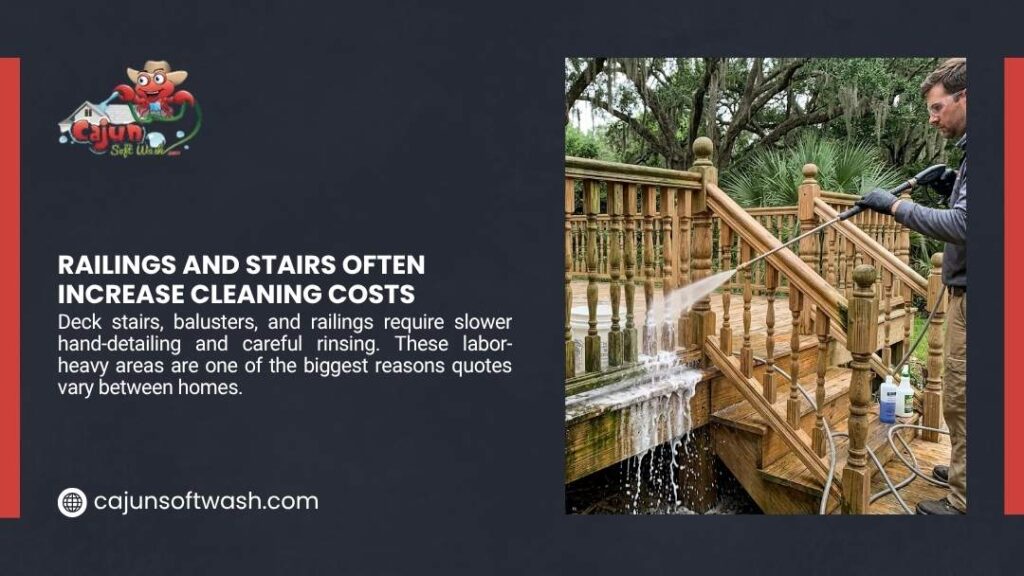
One thing that trips up a lot of homeowners: railings, balusters, stairs, corners, and shaded boards all take extra time. A flat driveway gets cleaned in long, fast passes. A deck requires a slower, more careful hand, and that labor shows up in the quote.
What Changes the Price to Clean a Deck?
Deck Size and Layout
Square footage is the obvious factor, but layout is what can genuinely surprise you. A 300-square-foot rectangle with open sides takes maybe a third of the time that a 300-square-foot deck takes when it has two staircases, built-in benches, lattice panels, flower boxes along the rail, and a narrow side gate that the crew has to maneuver equipment through. Those details add real labor.
Second-story decks can also add cost. Managing water runoff so it doesn’t streak the siding below, or drip onto windows and lower-level concrete, takes preparation, not just spraying. A crew that thinks about that before they start is worth more than one that cleans fast and leaves the mess for you to find later.
Wood, Composite, PVC, or Painted Decking
Material determines method. Pressure washing wood takes restraint because pine, cedar, and older treated lumber can splinter, fuzz up, or scar if the pressure is too high or the nozzle is too close. Composite decking looks tougher but can hold algae and mildew in its textured surface grooves just as stubbornly as wood.
Painted or stained decks need an honest pre-inspection. If the existing coating is sound, the cleaning process should leave it intact. If it’s already peeling, the wash will likely pull more of it off, which isn’t always bad before a fresh stain project, but the homeowner deserves to know beforehand.Trex, one of the most widely used composite decking brands, states in their care guidelines that a pressure washer should use no greater than 3,100 PSI with a fan tip attachment on approved composite lines. That manufacturer-specific detail is exactly why cleaning method matters as much as price; the wrong approach on the wrong surface can void a product warranty.
Mold, Mildew, Algae, and Louisiana Humidity
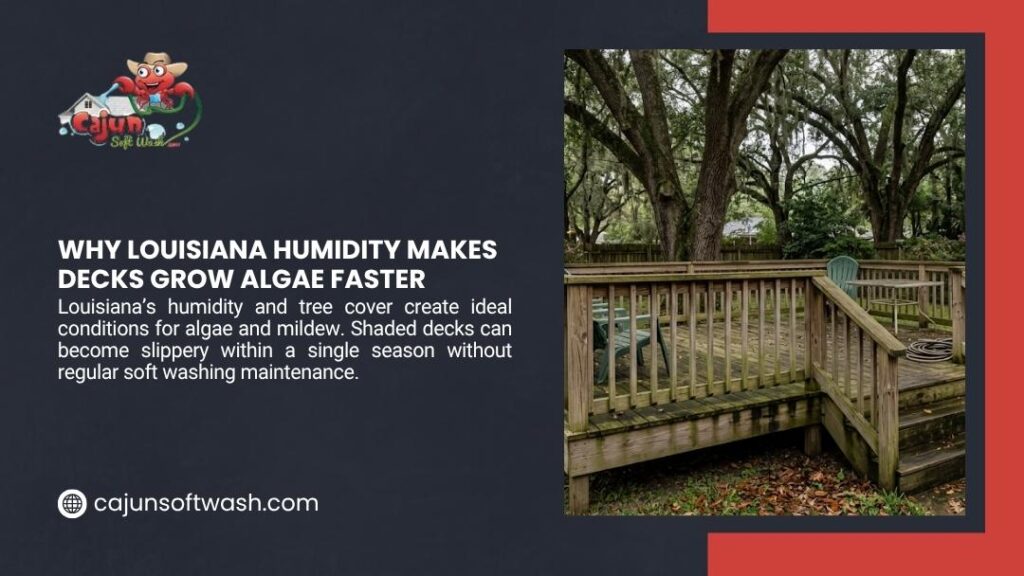
Shade and moisture are the two biggest contributors to fast-growing organic buildup on Louisiana decks. A shaded board stays damp longer after rain. Leaves and pollen trap moisture against the grain. Pool decks collect splash and humidity simultaneously. Over a single season, sometimes faster, those conditions build up layers that go from cosmetic to structural.
Black mildew and green algae are not just ugly. Algae, in particular, develop a filamentous root system that grows into the surface over time. On a wood deck, that’s the beginning of soft spots, staining that won’t rinse away, and steps that become genuinely slippery underfoot. Waiting another season rarely saves money. It almost always means more dwell time, a stronger solution, and a higher total estimate to fix what could have been caught earlier.
Pressure Washing vs. Soft Washing: The Method Question
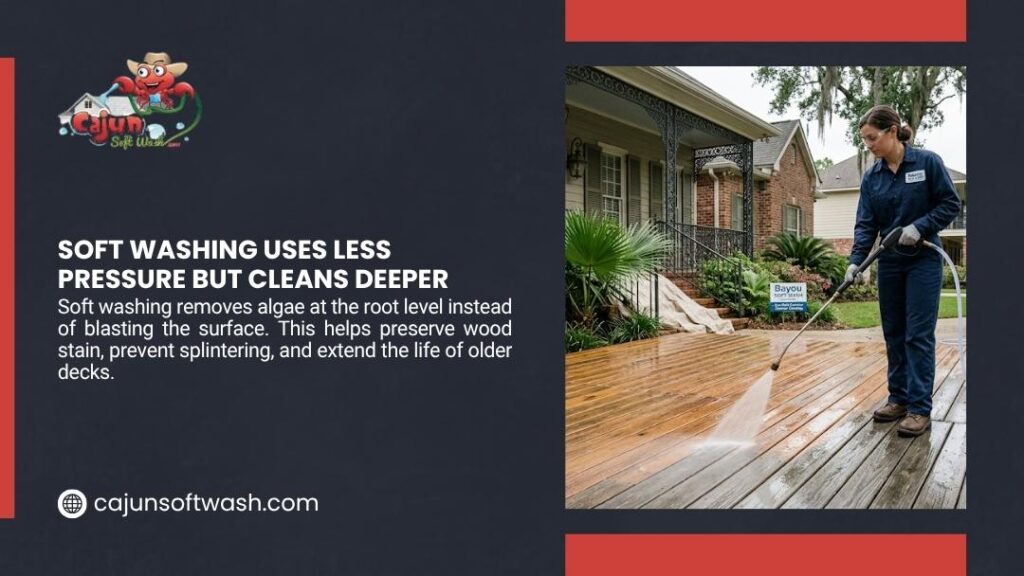
These are not the same job, even when they get lumped under the same category, which is why homeowners should understand the difference between soft washing and pressure washing before comparing quotes. Pressure washing relies on water force to remove dirt. Soft washing uses low pressure, closer to a garden hose, with a cleaning solution that breaks down organic growth chemically before rinsing it away.
For most deck surfaces, especially older wood or stained boards, soft washing is the safer choice. It protects the coating, doesn’t raise the grain, and, when done correctly, kills the root system of algae and mildew instead of just pushing it around.
That distinction matters when you’re comparing estimates. A pressure-only approach may be cheaper on paper but more expensive in the long run if it leaves wand marks, strips stain in patches, or blasts grit into nearby landscaping. The right question to ask any contractor isn’t just what’s the price, it’s what method will you use, and why.
Cajun Softwash uses soft washing specifically because of what the Louisiana climate does to exterior surfaces. Their technicians assess the surface before deciding on pressure and solution, not after. That’s the difference between cleaning a deck and restoring it.
Access, Water Supply, and Prep Work
Easy access brings the quote down. A complicated setup pushes it up. A wide gate, clear workspace, and working exterior spigot make for a smooth job. A raised deck behind a narrow fence, surrounded by planters, grill equipment, outdoor rugs, and fragile landscaping, that’s a different story.
Prep work is labor too: moving furniture, noting loose boards, rinsing delicate plants, covering anything near the spray zone, and managing drainage so the rinse water doesn’t pool against the foundation or stain a neighboring concrete surface. A responsible crew treats that as part of the job. One that skips it is leaving you to deal with the side effects.
Cost to Clean a Deck: Add-Ons That Change the Total
Once you move past the main walking surface, costs can add up quickly. Stairs, railings, pergolas, benches, and built-in planters all require slower, more detailed work. Sealing and staining add another layer entirely; those services require the deck to be fully dry and properly prepped first.
| Add-On Service | Typical Price Range | Why It Affects the Total |
| Stair cleaning | $50–$100+ | Steps collect algae and become slippery |
| Railing cleaning | $2–$4 per linear ft. | Balusters take slow detail work |
| Deck sealing | $1–$5/sq. ft. | Adds surface protection post-clean |
| Deck staining | $2–$7+/sq. ft. | Requires prep, dry time, and careful application |
| Furniture removal | $25–$100+ | Depends on the amount and weight |
| Driveway or patio bundle | Varies | Can reduce per-visit trip cost |
If your deck connects to a driveway or patio, Cajun Softwash’s driveway cleaning cost can help you compare bundled exterior cleaning prices.
What a Solid Deck Cleaning Quote Should Cover
Before you sign anything, confirm the estimate includes:
- The walking surface AND stairs and railings (or a clear line-item separation)
- Pretreatment if algae or mildew is present
- Plant and property protection steps
- The specific cleaning method (pressure, power, or soft wash)
- Insurance confirmation (workers’ comp + general liability)
- What happens if the deck has loose stain or soft boards
If the answer to any of those is we’ll figure it out on the day, that’s not a quote. That’s a starting point for surprises.
DIY vs. Hiring a Pro: Honest Comparison
Renting a pressure washer looks cheap until you add up the full picture: the rental itself, the cleaner, the drive to pick it up, the time figuring out the right tip and PSI, the cleanup, and, if something goes wrong, the repair. For a small, durable surface with light dirt, it may be perfectly fine. For anything older, stained, composite, or covered in real algae, the risk-to-reward calculation shifts quickly.
The most common DIY mistake isn’t bad intention, it’s using too much pressure held too close. One wrong pass leaves permanent stripes in wood. Harsh cleaners used without proper dilution can stress plants or leave residue that dulls the surface over time.
| Option | Estimated Cost | Best For | Main Risk |
| DIY cleaner and brush | $20–$60 | Light dirt on small decks | Labor-intensive, uneven results |
| Rented pressure washer | $40–$100/day | Durable surfaces, minor grime | Wrong PSI or nozzle damage |
| Purchased a pressure washer | $150–$500+ | Frequent home use | Storage, learning curve |
| Professional cleaning | $100–$250+ | Most decks are safer and faster | Choosing the wrong company |
Professional cleaning costs more because you’re paying for equipment, experience, formulated solutions, insurance, and, importantly, the restraint to not blast everything at full pressure, the same careful approach used in residential exterior cleaning services. The companies worth hiring know when to back off.
How to Compare Quotes Without Getting Burned
A fair quote explains the job. It tells you what surfaces are included, what method will be used, how they protect nearby plants and property, and whether pretreatment is part of the plan. If the estimate is just a number on a text message with no details, ask more questions before agreeing.
Specifically, ask:
- Is the company insured? (Ask for proof, not just a “yes.”)
- Are stairs and railings included, or separate?
- Will they use soft washing or straight pressure? Why?
- How do they handle loose stain or soft boards?
- What’s their plan for plant and landscaping protection?
These aren’t picky questions. They’re the difference between a deck that comes out clean and one that comes out damaged.
Why Cajun Softwash Handles Deck Cleaning Differently
There are a lot of exterior cleaning companies in South Louisiana. Most rely on pressure. Cajun Softwash was built around a different approach, soft washing, custom-mixed solutions, and technicians who are trained specifically on plant protection, surface safety, and the kind of organic buildup that Louisiana’s climate produces year after year.
They’ve been serving Baton Rouge, Gonzales, Prairieville, Denham Springs, and surrounding communities since 2013. They’re nationally certified through SoftWash Systems, fully insured with both workers’ compensation and general liability coverage, and they’re the largest soft wash company in the Baton Rouge area by active crews on the road.
For deck cleaning specifically, that means they assess the surface before picking a method, not after. They don’t use the same pressure on a weathered cedar deck that they’d use on a concrete driveway. And they’ll tell you upfront if your deck needs soft washing, a light rinse, or something more involved before any work starts. Request a free estimate from Cajun Softwash.
FAQs About Deck Cleaning Cost
How much does it cost to pressure wash a deck?
Most homeowners pay $100 to $250 for a standard residential deck. Large decks, heavy algae, multi-level layouts, or difficult access can push that higher. The final price depends on size, surface type, condition, and local labor rates.
How much does pressure washing cost per square foot?
Deck cleaning typically runs $0.30 to $0.70 per square foot for a basic wash. Add stairs, railings, mildew pretreatment, or sealing, and the per-square-foot cost rises. Decks generally cost more per square foot than flat concrete because they require more careful work.
Can you pressure wash a deck?
Yes, carefully. Wood, composite, painted, and stained decks can all be damaged by too much pressure, the wrong nozzle, or spraying too close. Older or coated decks often do better with soft washing, which cleans the surface without risking the grain or the finish.
How much does it cost to power wash and stain a deck?
Combined cleaning and staining typically runs $2 to $7+ per square foot, depending on prep work, stain type, railing complexity, and required dry time. If the old coating is peeling or the wood needs sanding first, add to that estimate.
How long does it take to pressure wash a deck?
A small or medium deck usually takes one to three hours. Larger decks with stairs, railings, and heavy buildup take longer. Sealing or staining extends the project further because the deck needs to fully dry before coating, sometimes 24 to 48 hours, depending on humidity.
Is soft washing better than pressure washing for decks?
For most wood, stained, painted, and composite decks, yes. Soft washing uses less force and relies on a cleaning solution to lift organic growth, which reduces the risk of surface damage and produces longer-lasting results. In Louisiana, especially, where algae and mildew go deep into the grain, soft washing does a more complete job.
Get a Clear Deck Cleaning Quote Before the Grime Gets Worse
Deck cleaning is a maintenance call, not a luxury. Leave algae and mildew in the grain long enough, and what started as a cosmetic problem becomes a structural one: soft boards, slippery steps, staining that won’t respond to cleaning, and eventually an early replacement conversation. In South Louisiana, that timeline moves faster than most people expect.
If your deck is in Baton Rouge, Gonzales, Prairieville, Denham Springs, or anywhere in the surrounding area, Cajun Softwash offers free estimates with no obligation. They’ll look at the surface, tell you exactly which method makes sense, and give you a clear number, not a ballpark built on assumptions.Request your free deck cleaning estimate from Cajun Softwash today. Your deck should look the way it did the day it was built. A careful wash, done right, can get it back there.